• TIBA (Trauma-Informed BA) articles
  • Cusp Emergence in the Community
  • About Cusp Emergence
  • About Dr. Kolu
  • ETHICS
  • Cusp Emergence University
  • Resources
  • Mentorship
  • Buffers
  • Behavioral Seismology: Predicting Behavioral Needs During Hormonal Changes

Cusp Emergence

~ Collaborating ~ Consulting ~ Constructing Repertoires

Cusp Emergence

Category Archives: resources

Behavioral Seismology

Featured

Posted by kolubcbad in adults, Autism, BACB CEU, Behavior Analysis, boundaries of competence, CEU, continuing education, Cusp Emergence University, CuspEmergenceUniversity, mental health, resources, Uncategorized

≈ Leave a comment

Tags

AFAB, autism, BACB CEU, behavior, behavioral seismology, cusp emergence, Cusp Emergence University, Dr. Kolu, ethics ceu, health, hormones, mental health, neurodiversity, PCOS, perimenopause, PMDD, PME, PMS, supervision CEU, trauma

Article in series on TIBA (trauma-informed behavior analysis) by Dr. Teresa Camille Kolu, Ph.D., BCBA-D

For many people including up to 90% of autistic women, our behaviors, moods, and medical symptoms worsen every month in the luteal phase of the menstrual cycle. But why? This may baffle even the most highly trained OBGYNs and behavioral scientists, let alone parents, caregivers, staff, and clients receiving behavioral services.
To Dr. Kolu, behavioral seismology is the scientific study of cyclical changes in a person’s experience that result in predictable (and potentially damaging) disruptions in an individual’s behavioral environment. Predictions about cyclical needs could be used to reduce the risk of damage and injury to clients and others related to hormone-behavior interactions. People can experience an increase in behavior needs, emotional needs, medical needs, and challenging interactions between all three, but it can help to know and be able to predict when they will be most at risk.

For individuals assigned female at birth (and relevant to anyone who loves, cares for, or conducts behavioral support for someone with these characteristics) , Dr. Camille Kolu discusses these four distinct behavioral risk profiles as ways to help make sense of the predictable disruptions that can occur regularly and monthly for up to 2 weeks at a time (as in PMDD) or for several years (as in perimenopause). The 4 risk profiles include the following:

  1. PCOS or polycystic ovary syndrome
  2. PMDD or premenstrual dysphoric disorder
  3. Perimenopause and
  4. PME (premenstrual exacerbation).

These 4 profiles are each accompanied by a pdf fact sheet downloadable as a resource in the new course on Behavioral Seismology from Cusp Emergence University. In each PDF are characteristic risk factors; biological signs; medical, behavioral and other symptoms the risk profile makes more likely; a to-do list for providers; and notes on expected interactions between behavior and the medical diagnosis. For instance, in PCOS, a client in behavioral services might experience self-injury related to the predictable pain during ovulation or food related behavior challenges that are related to the characteristic insulin resistance. In PMDD, a client in behavioral services who also has autism might experience sudden explosive outbursts in the second half of their menstrual cycle.

What are some of the benefits of becoming a healthcare or behavioral provider more informed about behavioral seismology?

Information can help to demystify behavior needs, as we put them into the context of an individual suffering with medical issues that need treatment. As a case example, one of Dr. Kolu’s patients had a diagnosis of PCOS (polycystic ovary syndrome) and took related medication. However, the behavioral team thought of that diagnosis as completely divorced from their behavioral treatment, and had never been trained on (or requested support to learn) what specific behaviors were anticipated and when they would get worse. As a result, the behavioral team had written goals that were inappropriate and inflexible. In most of the risk profiles we discuss in the Behavioral Seismology course, behaviors improve for the first two weeks of the cycle, when reinforcers are more potent. In the luteal phase of the cycle, a behavior targeted for reduction is likely to come raging back, as several things occur: one of the most significant is that aversive stimuli are temporarily more aversive! Another is that conditioning processes (such as extinction) are affected by hormone levels; for someone with trauma, the things we call “conditioned fear stimuli” or reminders of bad things that happened in the past, seem more present and potent during the luteal phase. Could these changes affect behavior? Absolutely! What if we ignored these biological realities and expected clients to simply do better and better on their goals in a linear trajectory? Could this be demoralizing for them and frustrating for caregivers and uninformed providers?

We can be more flexible in goal writing, more appropriate in support, more predictive in funding needs, and more compassionate in treatment, when we truly take someone’s medical needs into account. This is the point of the Behavior Analysis Certification Board (BACB)’s Ethics Code Item 2.12. For providers interested in taking that code seriously, Behavioral Seismology (4 CEUs total) provides an ethics CEU focused on treating behavior in ways much more contextually appropriate.

Other things you’ll find in the course:

  • 4 pdf risk profiles
  • An aversive stimulus tracker template (and filled out example)
  • A Cyclical Needs Conversation Guide for providers
  • A tool called “Rethink Your Language” (using the example of how the word “aggression” can cause impactful changes in someone’s life)
  • Insulin Resistance Handout (with information about how this condition intersects with each risk profile discussed in the training)
  • Information on how autism intersects in surprising ways with several of the risk profiles (and a tool called “Acting on Combined Risk”)
  • A Cyclic Behavior Support Plan Template
  • The Cyclic Systems Support Checklist (for companies and teams making these changes in their processes)
  • A video script for the 8 videos accompanied by printable handouts
  • Full references for over 70 published articles (including ones by autistic providers on lived experiences of individuals affected by both autism and hormone-behavior interactions
  • Thought questions
  • Thoughtful intersections and objectives to apply ethics codes to understanding the ethical implications of information in each chapter
  • and much more.

Want to learn more? Take the course, contact Dr. Kolu to let us know you want to attend one of our live training sessions on Behavioral Seismology, or see the references below.

Go back

Your message has been sent

Warning
Warning
Warning
Warning.

Behavioral Seismology References by Topic

Introduction to behavioral seismology:

Behavior Analyst Certification Board. (2020). Ethics code for behavior analysts. Copyright © 2020, BACB®, All rights reserved.

Beltz, A. M., Corley, R. P., Wadsworth, S. J., DiLalla, L. F., & Berenbaum, S. A. (2020). Does puberty affect the development of behavior problems as a mediator, moderator, or unique predictor?. Development and psychopathology, 32(4), 1473-1485.

Graber JA (2013). Pubertal timing and the development of psychopathology in adolescence and beyond. Hormones and Behavior, 64(2), 262–269.

Negriff S, & Susman EJ (2011). Pubertal timing, depression, and externalizing problems: A framework, review, and examination of gender differences. Journal of Research on Adolescence, 21(3), 717–746. doi: 10.1111/j.1532-7795.2010.00708.x 

References for PCOS:

Cherskov, A., Pohl, A., Allison, C., Zhang, H., Payne, R. A., & Baron-Cohen, S. (2018). Polycystic ovary syndrome and autism: a test of the prenatal sex steroid theory. Translational psychiatry, 8(1), 136.

Dan, R., Canetti, L., Keadan, T., Segman, R., Weinstock, M., Bonne, O., … & Goelman, G. (2019). Sex differences during emotion processing are dependent on the menstrual cycle phase. Psychoneuroendocrinology, 100, 85-95.

Dumesic, D. A., & Lobo, R. A. (2013). Cancer risk and PCOS. Steroids, 78(8), 782-785.

Evans, S. M., & Foltin, R. W. (2006). Exogenous progesterone attenuates the subjective effects of smoked cocaine in women, but not in men. Neuropsychopharmacology, 31(3), 659-674.

Evans, S. M., Haney, M., & Foltin, R. W. (2002). The effects of smoked cocaine during the follicular and luteal phases of the menstrual cycle in women. Psychopharmacology, 159, 397-406.

Katsigianni, M., Karageorgiou, V., Lambrinoudaki, I., & Siristatidis, C. (2019). Maternal polycystic ovarian syndrome in autism spectrum disorder: a systematic review and meta-analysis. Molecular psychiatry, 24(12), 1787-1797.

Mulligan, E. M., Nelson, B. D., Infantolino, Z. P., Luking, K. R., Sharma, R., & Hajcak, G. (2018). Effects of menstrual cycle phase on electrocortical response to reward and depressive symptoms in women. Psychophysiology, 55(12), e13268.

Sakaki, M., & Mather, M. (2012). How reward and emotional stimuli induce different reactions across the menstrual cycle. Social and personality psychology compass, 6(1), 1-17.

References for PMDD:

Browne, T. K. (2015). Is premenstrual dysphoric disorder really a disorder? Journal of Bioethical Inquiry, 12, 313-330.

Ellis, R., Williams, G., Caemawr, S., Craine, M., Holloway, W., Williams, K., … & Grant, A. (2025). Menstruation and Autism: a qualitative systematic review. Autism in Adulthood.

Epperson, C. N., Pittman, B., Czarkowski, K. A., Stiklus, S., Krystal, J. H., & Grillon, C. (2007). Luteal-phase accentuation of acoustic startle response in women with premenstrual dysphoric disorder. Neuropsychopharmacology, 32(10), 2190-2198.Ford, 2012

Freeman, E. W., & Sondheimer, S. J. (2003). Premenstrual dysphoric disorder: recognition and treatment. Primary care companion to the Journal of clinical psychiatry, 5(1), 30.

Gingnell, M., Bannbers, E., Wikström, J., Fredrikson, M., & Sundström-Poromaa, I. (2013). Premenstrual dysphoric disorder and prefrontal reactivity during anticipation of emotional stimuli. European Neuropsychopharmacology, 23(11), 1474-1483.

Halbreich, U., Borenstein, J., Pearlstein, T., & Kahn, L. S. (2003). The prevalence, impairment, impact, and burden of premenstrual dysphoric disorder (PMS/PMDD). Psychoneuroendocrinology, 28, 1-23.

Kulkarni, J., Leyden, O., Gavrilidis, E., Thew, C., & Thomas, E. H. (2022). The prevalence of early life trauma in premenstrual dysphoric disorder (PMDD). Psychiatry research, 308, 114381.

Obaydi, H., & Puri, B. K. (2008). Prevalence of premenstrual syndrome in autism: a prospective observer-rated study. Journal of International Medical Research, 36(2), 268-272.

Protopopescu, X., Tuescher, O., Pan, H., Epstein, J., Root, J., Chang, L., … & Silbersweig, D. (2008). Toward a functional neuroanatomy of premenstrual dysphoric disorder. Journal of affective disorders, 108(1-2), 87-94.

Sacher, J., Zsido, R. G., Barth, C., Zientek, F., Rullmann, M., Luthardt, J., … & Sabri, O. (2023). Increase in serotonin transporter binding in patients with premenstrual dysphoric disorder across the menstrual cycle: a case-control longitudinal neuroreceptor ligand positron emission tomography imaging study. Biological Psychiatry, 93(12), 1081-1088.

References for Perimenopause:

Ambikairajah, A., Walsh, E., & Cherbuin, N. (2022). A review of menopause nomenclature. Reproductive health, 19(1), 29.

Arnot, M., Emmott, E. H., & Mace, R. (2021). The relationship between social support, stressful events, and menopause symptoms. PloS one, 16(1), e0245444.

Avis, N. E., Crawford, S. L., Greendale, G., Bromberger, J. T., Everson-Rose, S. A., Gold, E. B., … & Study of Women’s Health Across the Nation. (2015). Duration of menopausal vasomotor symptoms over the menopause transition. JAMA internal medicine, 175(4), 531-539.

Constantine, G. D., Graham, S., Clerinx, C., Bernick, B. A., Krassan, M., Mirkin, S., & Currie, H. (2016). Behaviours and attitudes influencing treatment decisions for menopausal symptoms in five European countries. Post Reproductive Health, 22(3), 112-122.

Cusano, J. L., Erwin, V., Miller, D., & Rothman, E. F. (2024). The transition to menopause for autistic individuals in the US: a qualitative study of health care challenges and support needs. Menopause, 10-1097.

Duralde, E. R., Sobel, T. H., & Manson, J. E. (2023). Management of perimenopausal and menopausal symptoms. Bmj, 382.

Guthrie, J. R., Dennerstein, L., Taffe, J. R., & Donnelly, V. (2003). Health care-seeking for menopausal problems. Climacteric, 6(2), 112-117.

Hamilton, A., Marshal, M. P., & Murray, P. J. (2011). Autism spectrum disorders and menstruation. Journal of adolescent health, 49(4), 443-445.

Hoyt, L. T., & Falconi, A. M. (2015). Puberty and perimenopause: reproductive transitions and their implications for women’s health. Social science & medicine, 132, 103-112.

Karavidas, M., & de Visser, R. O. (2022). “It’s not just in my head, and it’s not just irrelevant”: autistic negotiations of menopausal transitions. Journal of Autism and Developmental Disorders, 52(3), 1143-1155.

Kling, J. M., MacLaughlin, K. L., Schnatz, P. F., Crandall, C. J., Skinner, L. J., Stuenkel, C. A., … & Faubion, S. S. (2019, February). Menopause management knowledge in postgraduate family medicine, internal medicine, and obstetrics and gynecology residents: a cross-sectional survey. In Mayo Clinic Proceedings (Vol. 94, No. 2, pp. 242-253). Elsevier.

Moseley, R. L., Druce, T., & Turner-Cobb, J. M. (2020). ‘When my autism broke’: A qualitative study spotlighting autistic voices on menopause. Autism, 24(6), 1423-1437.

Moseley, R. L., Druce, T., & Turner‐Cobb, J. M. (2021). Autism research is ‘all about the blokes and the kids’: Autistic women breaking the silence on menopause. British Journal of Health Psychology, 26(3), 709-726.

Namazi, M., Sadeghi, R., & Behboodi Moghadam, Z. (2019). Social determinants of health in menopause: an integrative review. International journal of women’s health, 637-647.

Ohayon, M. M. (2006). Severe hot flashes are associated with chronic insomnia. Archives of internal medicine, 166(12), 1262-1268.

O’Reilly, K., McDermid, F., McInnes, S., & Peters, K. (2023). An exploration of women’s knowledge and experience of perimenopause and menopause: An integrative literature review. Journal of clinical nursing, 32(15-16), 4528-4540.

Pinkerton, J. V., Stovall, D. W., & Kightlinger, R. S. (2009). Advances in the treatment of menopausal symptoms. Women’s Health, 5(4), 361-384.

Pinkerton, J. V., & Stovall, D. W. (2010). Bazedoxifene when paired with conjugated estrogens is a new paradigm for treatment of postmenopausal women. Expert opinion on investigational drugs, 19(12), 1613-1621.

Polo-Kantola, P. (2011). Sleep problems in midlife and beyond. Maturitas, 68(3), 224-232.

Roth, T., Coulouvrat, C., Hajak, G., Lakoma, M. D., Sampson, N. A., Shahly, V., … & Kessler, R. C. (2011). Prevalence and perceived health associated with insomnia based on DSM-IV-TR; international statistical classification of diseases and related health problems, tenth revision; and research diagnostic criteria/international classification of sleep disorders, criteria: results from the America insomnia survey. Biological psychiatry, 69(6), 592-600.

Santen, R. J., Stuenkel, C. A., Burger, H. G., & Manson, J. E. (2014). Competency in menopause management: whither goest the internist?. Journal of women’s health, 23(4), 281-285.

Santoro, N. (2016). Perimenopause: from research to practice. Journal of women’s health, 25(4), 332-339.

Williams, R. E., Kalilani, L., DiBenedetti, D. B., Zhou, X., Fehnel, S. E., & Clark, R. V. (2007). Healthcare seeking and treatment for menopausal symptoms in the United States. Maturitas, 58(4), 348-358.

Wood, K., McCarthy, S., Pitt, H., Randle, M., & Thomas, S. L. (2025). Women’s experiences and expectations during the menopause transition: a systematic qualitative narrative review. Health Promotion International, 40(1), daaf005.

Zhu, C., Thomas, N., Arunogiri, S., & Gurvich, C. (2022). Systematic review and narrative synthesis of cognition in perimenopause: The role of risk factors and menopausal symptoms. Maturitas, 164, 76-86.

References for Behavioral Perspectives on Topics in Hormones and Behavior:

Altundağ, S., & Çalbayram, N. Ç. (2016). Teaching menstrual care skills to intellectually disabled female students. Journal of clinical nursing, 25(13-14), 1962-1968.

Ballan, M. S., & Freyer, M. B. (2017). Autism spectrum disorder, adolescence, and sexuality education: Suggested interventions for mental health professionals. Sexuality and Disability, 35, 261-273.

Barrett, R.P. Atypical behavior: Self-injury and pica. In Developmental-Behavioral Pediatrics: Evidence and Practice; Wolraich, M.L., Drotar, D.D., Dworkin, P.H., Perrin, E.C., Eds.; C.V. Mosby Co.: St. Louis, MO, USA, 2008; pp. 871–885.

Carr, E. G., Smith, C. E., Giacin, T. A., Whelan, B. M., & Pancari, J. (2003). Menstrual discomfort as a biological setting event for severe problem behavior: Assessment and intervention. American Journal on Mental Retardation, 108(2), 117-133.

Edelson, S. M. (2022). Understanding challenging behaviors in autism spectrum disorder: A multi-component, interdisciplinary model. Journal of personalized medicine, 12(7), 1127.

Gomez, M. T., Carlson, G. M., & Van Dooren, K. (2012). Practical approaches to supporting young women with intellectual disabilities and high support needs with their menstruation. Health Care for Women International, 33(8), 678-694.

Holmes, L. G., Himle, M. B., & Strassberg, D. S. (2016). Parental sexuality-related concerns for adolescents with autism spectrum disorders and average or above IQ. Research in Autism Spectrum Disorders, 21, 84-93.

Jain, N. (2024). Effect of hormonal Imbalance on mental health among young women.

Klett, L. S., & Turan, Y. (2012). Generalized effects of social stories with task analysis for teaching menstrual care to three young girls with autism. Sexuality and Disability, 30, 319-336.

Laverty, C., Oliver, C., Moss, J., Nelson, L., & Richards, C. (2020). Persistence and predictors of self-injurious behaviour in autism: a ten-year prospective cohort study. Molecular autism, 11, 1-17.

Mattson, J. M. G., Roth, M., & Sevlever, M. (2016). Personal hygiene. Behavioral health promotion and intervention in intellectual and developmental disabilities, 43-72.

Moreno, J. V. (2023). Behavioral Skills Training for Parent Implementation of a Menstrual Hygiene Task Analysis. The Chicago School of Professional Psychology.

Rajaraman, A., & Hanley, G. P. (2021). Mand compliance as a contingency controlling problem behavior: A systematic review. Journal of Applied Behavior Analysis, 54(1), 103-121.

Richman, G. S., Reiss, M. L., Bauman, K. E., & Bailey, J. S. (1984). Teaching menstrual care to mentally retarded women: Acquisition, generalization, and maintenance. Journal of Applied Behavior Analysis, 17(4), 441-451.

Rodgers, J., & Lipscombe, J. O. (2005). The nature and extent of help given to women with intellectual disabilities to manage menstruation. Journal of Intellectual and Developmental Disability, 30(1), 45-52.

Shors, T. J., Lewczyk, C., Pacynski, M., Mathew, P. R., & Pickett, J. (1998). Stages of estrous mediate the stress-induced impairment of associative learning in the female rat. Neuroreport, 9(3), 419-423.

Wegerer, M., Kerschbaum, H., Blechert, J., & Wilhelm, F. H. (2014). Low levels of estradiol are associated with elevated conditioned responding during fear extinction and with intrusive memories in daily life. Neurobiology of learning and memory, 116, 145-154.

Veazey, S. E., Valentino, A. L., Low, A. I., McElroy, A. R., & LeBlanc, L. A. (2016). Teaching feminine hygiene skills to young females with autism spectrum disorder and intellectual disability. Behavior analysis in practice, 9(2), 184-189.

References for Conclusions (Menstruation as a Vital Sign; Insulin Resistance and Hormones; Premenstrual Exacerbation)

Click to access MenstruationAndMenopauseAtWork.pdf

https://casadesante.com/blogs/pcos/pcos-fmlapcos/pcos-fmla
Is PMDD a Disability? Workplace Challenges and Accommodations

Click to access discipline-q-a.pdf

Disciplining Students With Disabilities
https://www.prevention.com/health/g43724095/best-period-tracker-app/

Akturk, M., Toruner, F., Aslan, S., Altinova, A. E., Cakir, N., Elbeg, S., & Arslan, M. (2013). Circulating insulin and leptin in women with and without premenstrual disphoric disorder in the menstrual cycle. Gynecological Endocrinology, 29(5), 465-469.

Diamanti-Kandarakis, E., & Christakou, C. D. (2009). Insulin resistance in PCOS. Diagnosis and management of polycystic ovary syndrome, 35-61.

Eckstrand, K. L., Mummareddy, N., Kang, H., Cowan, R., Zhou, M., Zald, D., … & Avison, M. J. (2017). An insulin resistance associated neural correlate of impulsivity in type 2 diabetes mellitus. PLoS One, 12(12), e0189113.

Kolu, T. C. (2023). Providing buffers, solving barriers: Value-driven policies and actions that protect clients today and increase the chances of thriving tomorrow. Behavior Analysis in Practice, 1-20.

Kuehner, C., & Nayman, S. (2021). Premenstrual exacerbations of mood disorders: findings and knowledge gaps. Current psychiatry reports, 23, 1-11.

Lin, J., Nunez, C., Susser, L., & Gershengoren, L. (2024). Understanding premenstrual exacerbation: navigating the intersection of the menstrual cycle and psychiatric illnesses. Frontiers in Psychiatry, 15, 1410813.

Sullivan, M., Fernandez-Aranda, F., Camacho-Barcia, L., Harkin, A., Macrì, S., Mora-Maltas, B., … & Glennon, J. C. (2023). Insulin and disorders of behavioural flexibility. Neuroscience & biobehavioral reviews, 150, 105169.

Ueno, A., Yoshida, T., Yamamoto, Y., & Hayashi, K. (2022). Successful control of menstrual cycle‐related exacerbation of inflammatory arthritis with GnRH agonist with add‐back therapy in a patient with rheumatoid arthritis. Journal of Obstetrics and Gynaecology Research, 48(7), 2005-2009.

Vollmar, A. K. R., Mahalingaiah, S., & Jukic, A. M. (2024). The Menstrual Cycle as a Vital Sign: a comprehensive review. F&S Reviews, 100081.

Yu, W., Zhou, G., Fan, B., Gao, C., Li, C., Wei, M., … & Zhang, T. (2022). Temporal sequence of blood lipids and insulin resistance in perimenopausal women: the study of women’s health across the nation. BMJ Open Diabetes Research & Care, 10(2).

Be a buffer, solve a barrier: Actively caring about harms caused by ACES

Featured

Posted by kolubcbad in collaboration, Community, Education and Trauma-Informed Behavior Analysis, enriched environment, resources, TIBA, trauma, trauma-informed behavior analysis, Uncategorized

≈ Leave a comment

Tags

barriers, be a buffer, buffers, nadine burke harris, preventative behavior analysis, preventive behavior analysis, solve a barrier, TIBA, trauma-sensitive behavior analysis

Between 1990 and 2018, countries spent between 2.67% (Europe) and 3.6% (USA) of their GDP to treat harmful behavioral, medical and other effects of trauma (Bellis et al., 2019). Evidence shows that several medical areas are impacted by ACES (adverse childhood experiences; see Nadine Burke Harris’ incredible TED Talk on ACES). These harms increase in a dose-dependent way, with higher number of ACES related to greater risk of medical harms (Anda et al., 2008). Some of the medical harms that are increased after trauma include an increased likelihood of disease in adulthood (particularly obstructive pulmonary disease; ischemic heart disease; and autoimmune disease); greater number of infections; dental problems; asthma; sleep disturbances; and pain and gynocological disorders (Koita et al. 2018; Anda et al., 2008; Dong et al., 2004; Dube et al., 2009; Wyman et al., 2007; Lanier et al. 2010; Bright et al. 2015; Paras et al., 2009; Reissing et al., 2003).  

A small solution that goes a long way

Specific buffers (see Purewal et al., 2016) can actually protect against the harmful impacts of ACES on medical health. The particular buffers found to reduce harm include getting enough sleep, eating nutritious food, having access to mental health care, experiencing a safe relationship with someone, exercising regularly, and practicing stress relief techniques that allow someone to experience calming down (such as a simple mindfulness technique). Adding buffers may be a set of seemingly small actions, but they contribute to preventing problems from becoming larger, and may help solve challenges related to why a behavior plan is just not working. (Solving basic problems in the behavioral environment regarding access to needs can be an area consistent with the ethical imperative behavior analysts have to address conditions interfering with service delivery; see BACB, 2020, 2.19).

Image shows 6 buffer areas with an icon for each, including a lungs icon for mindfulness, an apple icon for nutrition, a bed icon for getting enough sleep, a heart for mental health care, two adults for having a safe relationship, and a picture of a person exercising. The text says "Be a buffer. Solve a barrier".
buffers-and-barriers-part-1-graphic-2Download

Install buffers, solve barriers

Although the buffers make a big difference in preventing from harms and protecting against future ones related to ACES, many individuals and families face major barriers related to access, information, resources, or behavioral needs. These barriers can reflect resource inequalities, individual differences, and cultural challenges that prevent many from experiencing the benefits.  How could we leverage “buffers and barriers” policies to protect against harms (and truly embody the preventative arm of behavior analysis)?

buffers-and-barriers-part-2-graphic-1Download

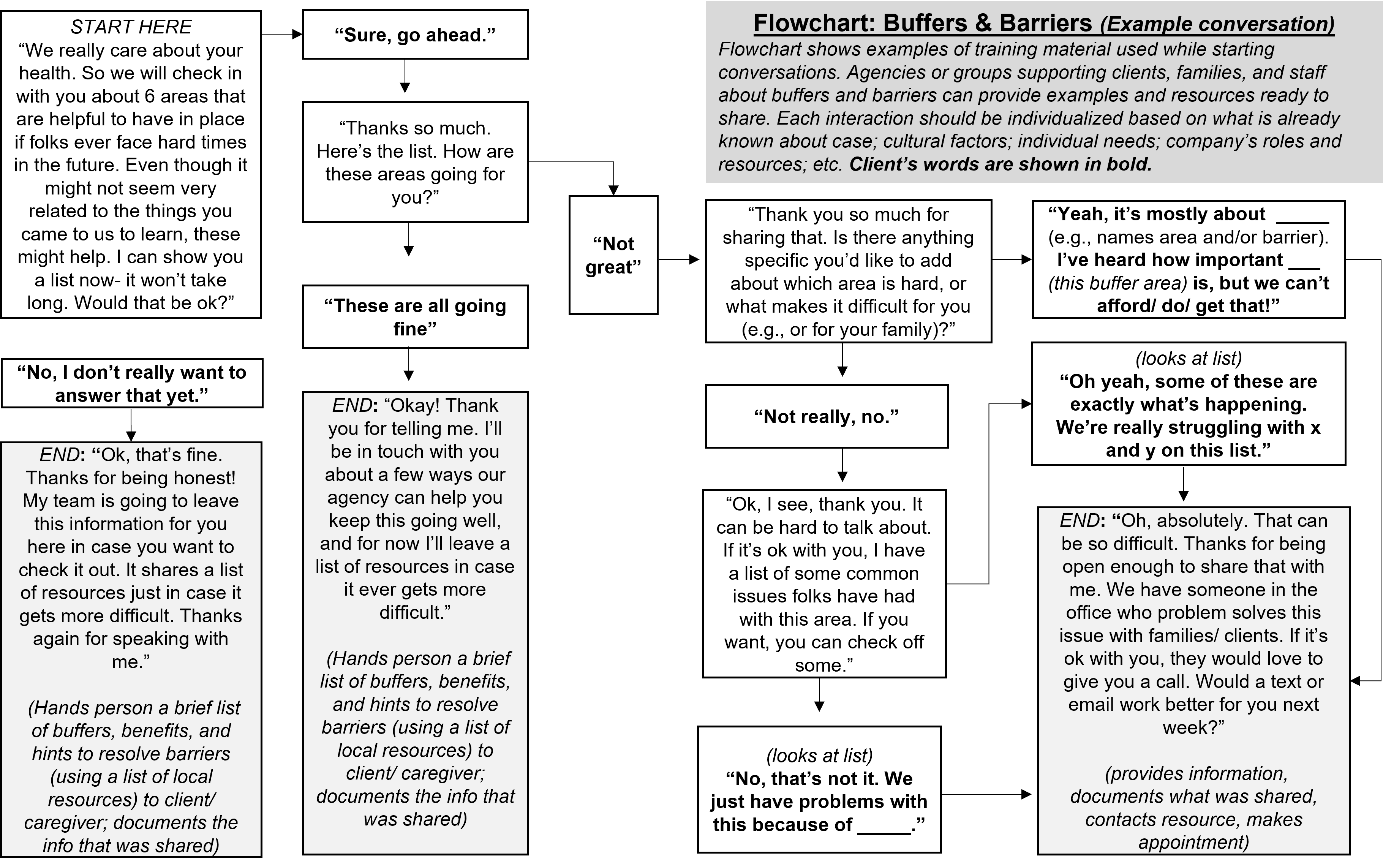
One of the difficulties with beginning to implement buffers for individual clients is that behavior analysts may be hesitant to devote precious resources to this new and potential preventive area. To assist teams in understanding further how policies might affect our clients, their caregivers, and our staff, Cusp Emergence is engaged in developing resources and collecting feedback about their use. Some of the resources provide examples for conversations we could have with others, while others are visuals to help others easily understand the buffers and barriers (such as the “Be a buffer. Solve a barrier” downloadable pdfs in this article). We also have lists of policy ideas for interested agencies, risk benefit assessments to aid in their implementation, and examples of how we define buffers for individual clients, families and staff. Use our contact us form below to let us know which resources are your favorites or what else would help you more actively approach this area. Oh, and stay tuned for more on this incredible topic. Soon we’ll be be exploring buffers in more detail, including sharing some ways we integrate it for our clients, how it can be meaningful for caregivers and staff, and some of the research on each one.

conversation-about-buffers-and-barriers-1Download

Go back

Your message has been sent

Warning
Warning
Warning
Warning.

Get ready to learn about ASD and trauma

11 Monday Oct 2021

Posted by kolubcbad in adults, Autism, BACB CEU, Behavior Analysis, behavior cusp, Behavioral Cusp, CEU, children, collaboration, Community, continuing education, contraindicated procedures, Cusp Emergence University, CuspEmergenceUniversity, Education and Trauma-Informed Behavior Analysis, learning, podcast, resources, risk analysis, risk assessment, risk versus benefit analysis, TI-ABA, TIABA, TIBA, trauma, trauma-informed behavior analysis

≈ Leave a comment

Tags

podcast

By Dr. Camille Kolu, Ph.D., BCBA-D

Behavior analysts who treat people with autism probably know that ASD often co-occurs with trauma. But did you know that up to 50 percent or more of people with autism may have experienced trauma, that ASD itself is a risk factor for experiencing trauma, or that children with autism may be around 2.5 times more likely to experience foster care, itself another risk factor for trauma?

These findings are some of the reasons researchers (as well as research-practitioners, including those of us at Cusp Emergence) urge practitioners to adopt screening in order to support the huge group of people affected by both trauma and ASD (see Brenner, Pan and Mazefsky et al. on the need for screening, and special behavioral differences that occur in this population).

ASD and TIBA: Our newest upcoming course on CuspEmergenceUniversity.com

They are also just a few of the things you’ll learn when you take the upcoming course on CuspEmergenceUniversity on trauma and autism (coming Fall 2021). Other topics we cover include:

-client examples from both child and adult populations whose experiences include autism and trauma

-literature references helping practitioners discover more about what trauma related experiences people with autism may face

-how behaviors themselves can be risk factors for additional trauma

-behavior programming examples that may be counterindicated procedures depending on the individual needs of autistic people who faced trauma

-examples of ASD communication needs that have been particularly helpful to target when supporting this population after trauma

-behavioral cusps that can make a huge difference after trauma

-examples of worst case scenarios people face when trauma history is not taken into account for individuals with autism after trauma….

…and much more. We also cover how Cusp Emergence uses the SAFE-T model and Assessment (including our risk versus benefit tools) to be more supportive, mitigate risks unique to autism and trauma, and learn more about the whole person and their needs.

Just can’t wait for the CEU course on autism and trauma to be posted in the coming months? Tune in to The Autism Helper’s podcast. Dr. Kolu’s interview with Sasha Long, BCBA is live and we’re excited to share it with you!

25 Things I Want You to Know: Ways I use trauma to inform my practice of behavior analysis

26 Thursday Aug 2021

Posted by kolubcbad in adults, Autism, BACB CEU, Behavior Analysis, boundaries of competence, CEU, children, collaboration, Community, continuing education, contraindicated procedures, Cusp Emergence University, CuspEmergenceUniversity, Education, mental health, resources, risk versus benefit analysis, TI-ABA, TIABA, TIBA, trauma, trauma-informed behavior analysis

≈ Leave a comment

Tags

behavior analysis, TIBA, trauma, trauma and behavior analysis, trauma-informed behavior analysis

This is the 21st article in a series on Trauma-Informed Behavior Analysis by Dr. Camille Kolu, BCBA-D

I often hear from educators and behavior analysts, “What do you actually do differently if your client has faced trauma, given your role as a behavior analyst?” In this bulleted series we’ll get there, but we’ll start with what I would want you to understand about myself as your client (or teammate!) who has experienced adverse experiences. Here we list 25 different things I want you to know. (As a hint, each thing we can understand about a person could be a bridge, if you choose to walk through this difficult thing to a shared place of understanding on the other side. We’ll explain in more detail in future posts, or you can check out our course library over at CuspEmergenceUniversity if you’re interested in expanding your boundary of competence). But first, if I were your client or team member – if my past involved trauma – I would want you to understand that now, with the presence of historical trauma,

I MAY:

  • have difficulties calming down when under pressure
  • have difficulties using “appropriate” behaviors even after years of programmed reinforcement for using them
  • have mental health concerns that have never been appropriately addressed because my behavior masks my needs
  • have medical problems that are going unaddressed because my providers have never asked me about my trauma history, despite it being a fact that it confers serious medical risks. (See the incomparable Nadine Burke Harris talk about her work on this, and the amazing takeaways, in her classic TED Talk– or see some of her research and outcomes on using screening tools)
  • be more likely to use certain “challenging behaviors”
  • and find it more reinforcing, even important, to use behaviors you would describe as challenging
  • use behaviors that are more resistant to change than you are used to as an instructor, therapist, parent, supervisor or friend
  • find certain interventions painful, difficult, or harmful
  • find some kinds of social interactions difficult or painful
  • have trouble controlling some of my bodily functions, but may not be able to describe to you why
  • experience “triggers” in the environment that you can’t see (but that an experienced provider could locate, document, and learn to help me explore or move with, as appropriate)
  • experience some times of the day, week, month, or year that are marked by aversive events for me that you won’t know about
  • may not be able to explain WHY this time is difficult or why I am using an “old pattern of behavior”
  • find it more difficult to perform, or to learn and remember new things than others of my age, skill level, or occupation – even if “on a good day” I can do this just fine. (By the way, have you read The Four Agreements? Do you know how important it is to take nothing personally and know that others are doing their best (and how critical it is for you to do the same)? If not go check it out.
  • use occasional behavior that is mistaken as “ADHD” or “ODD”, or more, but that is actually related to how I was mistreated
  • have been given misdiagnoses, treatments that didn’t work, or medications that made my problems worse or that interacted with each other in harmful ways that hurt my body and cognitive function
  • attempt to advocate but get ignored when I try to communicate pain, mistreatment, or a medical concern
  • be more likely to experience FUTURE trauma because of what I faced before
  • lack a reinforcing and useful repertoire (e.g., full complement of skills and things to enjoy), especially if I faced treatments that just tried to “teach me a replacement behavior” for a few challenging things I did, instead of understand and grow me as a person in the context of my own community, needs and desires for my future
  • be part of a long line of marginalized people or one of multiple generations exposed to trauma
  • have a chance to change our lineage… if you help

After all, I AM:

  • a human being with interests, feelings, and great potential for growth and joy
  • more likely to experience certain risks (I may be at greater risk of losing my educational or therapeutic setting, go through harmful discipline practices, be exposed to law enforcement interaction, for example)
  • in need of understanding, an informed supervisor and system of support, and someone who will document my challenges so we can work on them, but not emphasize them so much they ignore my strengths, needs and skills
  • capable of much more on my best day than I show on a hard day… but I am always doing “my best” at the time, given what I have been through and what I AM going through, and despite what it looks like

Taking these points as a starting place, future posts in this series explore what I NEED as a person who may have faced these things, and what I DO as a behavior analyst who cares. We’ll also share some of what I need from my supervisors or systems administrators! What would you add to this list? What are some of your action items?

Self-paced SAFE-T Assessment Training is here!

16 Tuesday Feb 2021

Posted by kolubcbad in adults, Autism, BACB CEU, Behavior Analysis, behavior cusp, Behavioral Cusp, CEU, children, collaboration, Community, continuing education, contraindicated procedures, Cusp Emergence University, CuspEmergenceUniversity, Education, ethics, mental health, resources, risk analysis, risk assessment, risk versus benefit analysis, supervision, teaching ethics, TI-ABA, TIABA, TIBA, trauma, trauma-informed behavior analysis, Uncategorized

≈ Leave a comment

Tags

behavior analysis, behavior analysis CEU, CEU, continuing education, cuspemergence, CuspEmergenceUniversity, ethics ceu, SAFE-T, SAFE-T Assessment, SAFE-T model, SAFET Model, supervision CEU, TI-ABA, TIABA, TIBA, trauma, trauma CEU, trauma-informed behavior analysis

It’s finally here! We have learned so much from workshop attendees, trainees and supervisees in this area over the past several years, and appreciate the attendance, feedback and support of everyone who has taken the training or used a version of the SAFE-T Assessment. Coming on Monday, the booklet and training for assessing trauma-related factors affecting our clients of behavioral services, are available ONLINE as a self-paced course. This course provides a download of the new and expanded SAFE-T Checklist booklet, which contains several tools enabling the screening and documentation of over 200 trauma-related factors, and a Risks and Needs form to help teams understand (and document) how these factors confer risks (and converge in risk factors that must be solved or mitigated to protect our clients, teams, and ourselves). The booklet contains an extensive reference section and team supportive tools as you use your new knowledge to better align your team’s skillset with the Ethics Code, and the individualized needs of behavior services clients after trauma.

Several of our behavior analytic and collaborator clients across institutions, educational facilities and private companies clients have shared that learning to assess risk factors related to trauma, and to apply this information to their teams’ FBAs and risk mitigation plans, took their skillset to the next level – essentially affording them an opportunity to acquire an important behavioral cusp for their teams.

Some new components of the booklet include:

  • An optional buffer/ resilience score to assess whether protective environmental and therapeutic components of a client’s plan are in place (to understand some ways that trauma gives rise to medical and behavioral challenges and some buffering factors that can help, please see the book or scholarly articles by Dr. Nadine Burke Harris (e.g., Oh D.L. et al. 2018), who is the Presidential Scholar for 2021’s upcoming Association for Behavior Analysis International’s conference. She will address the critical topic of breaking the intergenerational cycle of adversity, and screening for ACES (adverse childhood experiences).
  • Table of potentially contraindicated procedures (cross referenced with items and risk clusters assessed in the Risks and Needs form)
  • Information about over 50 risk clusters (groups of related risks in the 6 assessed sections of the SAFE-T Assessment)
  • Cross-reference tables showing, for each item we screen for, the location(s) in the SAFE-T Checklist
  • Infographic on components of a trauma-informed FBA
  • Brief templates for Risk Versus Benefit Analysis and Risk Mitigation Planning
  • The IPASS (Inventory of Potential Aversive Stimuli and Setting Events) tool and instructions
  • References (organized by topics) covering over 40 areas or topics of literature related to trauma (including relationships of ACES to medical problems, ACT and intellectual disability, ACT and anxiety, foster care and adoption, the relationship of abuse to pain, drug use and trauma, and much more).

Time required: The course includes about 4.5 hours of video content in 12 lessons, each followed by a brief quiz.

Price (includes 4.5 CEU course and SAFE-T Assessment booklet download): $189.99

For $20 off through the end of February, use the coupon code “SAFET20”.

To register: cusp.university

Seeing Snakes and Spiders

27 Friday Sep 2019

Posted by kolubcbad in BACB CEU, Behavior Analysis, boundaries of competence, CEU, children, collaboration, Community, continuing education, Cusp Emergence University, CuspEmergenceUniversity, edtiba, EDTIBA10, Education, Education and Trauma-Informed Behavior Analysis, ethics, mental health, resources, sale, teaching behavior analysis, teaching ethics, TIBA, trauma, trauma-informed behavior analysis, Uncategorized

≈ Leave a comment

Tags

ABA, continuing education, CuspEmergenceUniversity, edtiba, ethics, events, mental health, resources, trauma-informed behavior analysis

This is the 17th article in a series on Trauma-Informed Behavior Analysis by Dr. Teresa Camille Kolu, Ph.D., BCBA-D.

spider

What did you do when you saw this picture? Chances are you experienced some additional events beyond just “seeing it”. Did you jump? Experience an increase in your breathing rate? Use some choice verbal behavior? Avert your eyes? (And are you prepared to read on? Fair warning… there’s a snake coming up).

Seeing with fresh eyes

I noticed a couple of things about our culture, and fear responses, this past week.

My young daughter’s love for flap books—the kind where you pull back a piece of paper to reveal something—knows no bounds. So she was instantly drawn to a tattered old library copy (apparently she shares this love with lots of peers) of “Buzz Buzz, Baby”- with poorly rendered babies exploring “bugs”. Around the third page the baby pulls back a web flap to unveil, in the book’s words, “EEK! The itsy bitsy spider!”

Whenever I read the book to her I leave out the “Eek!”.

I think she can come up with that on her own, if she happens to, although chances are she’ll get it from me in a non-mindful moment. (In the 1980’s Cook and Mineka did a classic study in which infant monkeys “acquired” a persistent fear of snakes by watching their scared mothers encounter a snake).

Now that we’ve moved out to the country, we encounter our own “Itsy” (and many for whom that name is woefully inadequate) all the time. (I do recommend this thing called the BugZooka… it does work really well, if you like catch-and-release). Itsy and I go way back, and not necessarily in a good way, although I always appreciate her beauty. But I still want to be warned before you text me her picture, dad.

This summer, one tenacious spider (pictured, top) built a web, over and over, in a windy area outside the kitchen, where we see it numerous times daily. The first few (ok, few hundred) times I nearly jumped out of my skin. When I remembered in time, I was very careful to breathe and compose myself before walking to the sink with my daughter, where I’d point out the spider cheerfully and sing (with all the hand movements) the requisite song. Before long she was signing the song herself. Next I noticed myself no longer jumping when I saw the spider.

THEN… one windy morning Itsy was gone. Gone!

I didn’t breathe a sigh of relief.

I was surprised and curious to feel a strange emotion… like MISSING. I missed her! Was she alright? Would she come back? (She was. She did).

With painful awareness that this is temporary, I often marvel that my daughter’s eyes are not only young… they are unconditioned. They don’t have a lot of pairings with events like scary movies about this deep primate fear, being bitten, or seeing spiders while a parent jumps and screams. They are fresh, curious, hopeful eyes.

Yesterday we chanced upon something rather larger than even the biggest spider. It was this old girl… fat and long, with ring upon ring adorning her useful brown rattle. Depending on my readers, maybe you’ll be happy that instead of grabbing a hoe, I called a guy I read about in my new community’s online forum… apparently this guy LOVES snakes. “ANY snake’s worth my time”, he told me as he jumped in his truck. 35 minutes later he had driven up to our homestead, hooked it and taken it. Now it’s in a quite different rattlesnake heaven than the kind I had sort of planned to send it… blissing out in a protected wilderness area up near Fort Collins, I’m told.

rattler

As he removed our snake into a large vented box and curiously counted the rings (while remarking on how huge it was), the guy’s face was composed; he exuded a strange calm excitement. Normally, the fear response to snakes and spiders is part of our biology. Evolutionary biology has several theories why it’s present even in infancy, and why it might have behooved our ancestral mothers to experience more arousal and get out of there to protect their young in the presence of these critters. I can’t help but wonder what this guy’s history is like. Why does he love something that most of us are scared of?

Kids with traumatic histories

If you’re an educator going back to school, many of your kids are coming in with an avoidance response, or a “get out of there!” escape response, ready to go. Some of them will use these responses in the most annoying ways, dropping all their work on the floor or crawling under desks when you announce the quiz. But some of them have a special background you can’t see. For some, they will use these “fear responses” when they encounter “triggers” that you and I do not think of as scary.

Why is that?

Well, the things that were there when they experienced really bad situations are now “paired”, living together in their past, the same way I smelled an old lady yesterday wearing my own granny’s soap and got emotional thinking about my dear departed loved ones. Or the same way you hear a certain song from your high school dance and think about that year, or that person, or that kiss.

And that’s not all. Psychology explains in anxiety journals why, if you’re a person with an intense “fear” or phobia of spiders, not only do you spot them more quickly and tend to see them where your peers might see other things, like mushrooms or flowers faster in the SAME PICTURE—but to you, they also appear BIGGER.

What can we do about it?

How can we help students show up for their education and get all the learning opportunities they can… even when the school, teachers, and peers accidentally give them “fear related” stimuli all day long? (While psychology explains partly WHY these pairings happen, behavior analysis does too, especially if you read some relational frame theory, learn about respondent conditioning, and take a long-term functional analytic approach. Behavior analysis also goes a long way in helping the helpers undo some of the damage, teaching kids to approach adults and “unpair” adult attention from it’s previously bad parts: if I’m a student who has been through neglect abuse, my teacher coming over to me to praise my “good behavior” might not be a welcome stimulus at first… and my teacher’s praise, as well-intentioned as it may be, might not work).

Cusp Emergence University has been hard at work getting the new online training course ready for educators, and behavior analysts who work in education. We hope to help you to start answering these questions for yourself and your students and teams. On Monday, September 30, our course “Education and Trauma-Informed Behavior Analysis” opens to a 7 day sale (use the code EDTIBA10 for 10 percent off this CEU opportunity). We’re providing BCBA’s and BCBA-D’s with 3.5 continuing education credits, and 3 of those are in ethics.

coupon

Sign up now!

Start your fall to-do list: Register now for Paradigm play webinar this Monday (and more)!

06 Friday Sep 2019

Posted by kolubcbad in BACB CEU, Behavior Analysis, CASA, CEU, children, Community, continuing education, Court Appointed Special Advocate, Early Intervention, Education, learning, play, resources, Uncategorized

≈ Leave a comment

Tags

paradigm behavior, play, webinar, workshop

This summer has been a busy one for Cusp Emergence. Dr. Kolu taught Ethics to University of Colorado Denver students, jumped back into work doing consultation to support businesses and BCBA’s to reach their behavior analytic goals, trained CASA volunteers and more. Next month we will be training Friends of Broomfield and (finally!) putting the finishing touches on the Education and Trauma Informed Behavior Analysis course by Cusp Emergence University.

In the meantime, we just learned about a great low-cost resource for parents! Paradigm Behavior has all kinds of great parent-oriented supports that also help behavior analysts and caregivers. This Monday they are having a sale on an informative webinar!  REGISTER HERE:

https://paradigmbehavior.com/play-registration

You know who would also benefit from this? Foster and adoptive parents, preschool teachers, and church nursery staff would find this super helpful. Our trauma informed teams also love learning how to enrich “time in” with kids who are just learning to have fun with adults in carefree ways after a difficult early life.

And coming up, this fall we’ll register for the APBA (Association for Professional Behavior Analysts) convention coming to Denver 2020, attend COABA (Colorado Association for Behavior Analysts) on November 2,  sign up for 4CABA (Four Corners Association for Behavior Analysis) that meets in Colorado Springs April 2020, and submit proposals for the May 2020 workshops at ABAI (Association for Behavior Analysis International) in DC. We’ll be back shortly to tell you all about the new courses we’re offering this fall. Contact us today if you’d like Cusp Emergence to tailor an online workshop or training for your team. Hope to see you soon at a local event or meet you at one of our webinars (CEU’s offered at all of our events)!


CEU stands for Cusp Emergence University!

13 Tuesday Nov 2018

Posted by kolubcbad in About, BACB CEU, Behavior Analysis, boundaries of competence, CEU, continuing education, Education, ethics, learning, resources, risk analysis, risk assessment, teaching behavior analysis, teaching ethics, trauma, trauma-informed behavior analysis, Uncategorized

≈ Leave a comment

Tags

BACB CEU, CEU, continuing education, ethics, trauma, trauma-informed behavior analysis

Need training for your team in trauma-informed behavior analysis? Cusp Emergence University has launched! 

Come check out the site, sign up for one of Dr. Kolu’s courses, or just have a look around.

While we’re beta testing, save 15% on 3 CEU’s in a 2.5 hour continuing education course (Introduction to the Ethics of Trauma-Informed Behavior Analysis).

This course is for intermediate audiences interested in learning more about the ethics of trauma-informed behavior analysis, or using behavior analysis to provide responsible, evidence-based and sensitive support to individuals whose backgrounds include early or serious adverse experiences. Take this course to prepare your practice and team and plan for the increased risks associated with this population. BACB certificants receive your certificate upon completion of the course, which includes quiz questions to help keep you engaged. Course includes 2 ethics CEU’s.

DISCLAIMER: Dr. Camille Kolu of Cusp Emergence is a Behavior Analysis Certification Board (BACB) approved ACE provider. Advertisements for new continuing education opportunities (per the board requirements) will often be placed here. Check cuspemergenceuniversity.com for the full details, to enroll in courses, or to learn more about the continuing education opportunities provided.  The BACB does not endorse any individual courses.

Come back to the tab Cusp Emergence University, or check out CuspEmergenceUniversity.com  any time for updates on courses in development.

Dr. Kolu of Cusp Emergence interviewed by Awake Labs

19 Friday Oct 2018

Posted by kolubcbad in adults, Behavior Analysis, children, Community, data, Education, job aids, resources, trauma, trauma-informed behavior analysis, Uncategorized

≈ Leave a comment

Tags

collaboration, community, partners, self-advocates, trauma, trauma-informed behavior analysis, visual tools

This post is part of the series on Trauma-Informed Behavior Analysis by Dr. Camille Kolu, Ph.D., BCBA-D.

TIBA quote

Sometimes you meet someone who does work that you can really get behind. Over the past month, I have enjoyed learning about Awake Labs, a Canadian company providing easy and elegant solutions to self-advocates, families and teams who need to track information, data, and progress in the context of clients’ stories and strengths. Their Reveal Stories are an interesting way to do this. Awake Labs partners with community educators, providers, and medical professionals, offering ways to collect data and graph progress. During our conversations this month, Paul Fijal of Awake Labs also interviewed me about my work with trauma and behavior analysis, posting our interview on their blog. Check it out!  

https://awakelabs.com/


Spotlight on team role: CASA (Court Appointed Special Advocates)

07 Friday Sep 2018

Posted by kolubcbad in Behavior Analysis, CASA, children, collaboration, Community, Court Appointed Special Advocate, Education, ethics, resources, Uncategorized

≈ Leave a comment

Tags

CASA, community partner, court appointed special advocates, trauma-informed behavior analysis

This post is part of the series on Trauma-Informed Behavior Analysis by Dr. Camille Kolu, Ph.D., BCBA-D.

Why is this in the trauma-informed series? Behavior analysts have ethical responsibilities to disseminate information about our field (Compliance Code item 6.02), cooperate with others (2.03), individualize treatment based on the contextual variables involved in our clients’ cases (4.03), and identify, eliminate and communicate about the environmental constraints on the effectiveness of our treatment plans (4.07). All four of these ethical imperatives can be positively impacted by involving CASA! And these ethical areas are even more important when treating behavior of a person who has been through trauma, abuse or neglect.

Spotlight on team role: CASA, or Court Appointed Special Advocates

Cusp Emergence has had a busy summer! We’ve been continuing public speaking and training, spreading the word about trauma-informed behavior analysis to community partners. There are few things more rewarding than working on a case with a partner who asks us to come back and train their agency, providing continuing education for their team members. This is even more exciting when the provider is newer to behavior analysis. We love disseminating information about the field and hearing from the community!

This post is a shout-out spotlighting CASA. Never heard of them? These people form a compassionate army of people from all walks of life providing long-term relationships and supportive advocacy to local children whose lives involve the family court and foster care system. Some organizational positions are paid to keep the group running, but many are volunteers. The program is nationwide, and depending on the location and jurisdiction, a CASA may be a guardian ad litem or volunteer their time. Some are young professionals, others are retirees; they have in common a passion for children who have experienced inconsistency in caregiving, often including abuse and neglect. Court Appointed Special Advocates receive extensive training and may donate their time to attend visits with the child in the child’s group home, foster home, adoptive family home, residential facility, or hospital. I see them advocating at meetings, attending court dates to speak in the child’s best interest after gathering information; visiting at school; and attending trainings where I provide reviews of behavior assessments and plans. For some children removed due to abuse and neglect, a CASA may be the ONE familiar face present at family court, several foster homes, many schools, and holiday parties held in the hospital where the child was placed after using aggression and receiving a medication change. Caseworkers are familiar too, but may change more than the court appointed special advocates—many of whom follow a child for life.

Maybe you’re a BCBA reading this, thinking “How does this relate to my role?”

First, if you’ve got a client in foster care, you can ask the client’s caseworker if the person has a CASA. If so, you can offer to meet with them and learn more about their role and their history with the person. (I have never had a CASA refuse to meet with me, although this is on their own time—more commonly they are excited to learn about behavior supports, and often advocating to get me on their other cases after they learn more about behavior analysis).

I also train all my client’s CASAs in the functional behavior assessment results and behavior plan. Why?

  • On their visits they may see challenging behavior and want to know the best, and most supportive, way to respond or prevent challenges.
  • They may conduct unannounced visits in the child’s home or school, and these may be followed by increases in challenging behavior that the team finds confusing. It is helpful to educate the entire team, CASA included, on the changes in behavior that may occur after the child is visited by an unannounced person associated with previous family visits, even if the child typically enjoys visits with the CASA.
  • Since the CASA is by definition an advocate, they can be very helpful in sharing information with the court or team that help them to put behavior services in place. In some areas, services can be more difficult to fund if a child has severe behavior needs but not a diagnosis like autism that makes it easy to get insurance on board. In these cases, the county or court may step in and require or help fund some behavioral treatment that is instrumental in helping the foster family understand and manage the child’s behaviors.

Thank you so much, to Becca and Mara at CASA of Adams and Broomfield Counties! It was fantastic to see so many of your team last month.

Want to learn more?

Check out the national CASA movement:

http://www.casaforchildren.org/site/c.mtJSJ7MPIsE/b.5301295/k.BE9A/Home.htm

Are you local to the Cusp Emergence community around Adams County, Colorado? Check out the Adams County CASA page (and be sure to attend their free informational event on October 18!)

https://casa17th.org/

Read about CASA in the news, with stories about topics like how to become a CASA…

https://www.caller.com/videos/news/2018/07/12/how-become-court-appointed-special-advocate/35522163/

or read from the perspective of a judge whose decisions are informed by their work:

http://www.sj-r.com/x1374045505/Court-Appointed-Special-Advocate-program-history

Find the Behavior Analysis Certification Board Compliance Code here:

https://www.bacb.com/wp-content/uploads/2017/09/170706-compliance-code-english.pdf


← Older posts

Recent Posts

  • Lessons from a Lost Balloon: Growth, Safety, and Kindness
  • Behavioral Seismology
  • 10 Actions This Year: A call-in if you read Boggs et al. (2025)
  • Understanding Values: The Connection to Context and Action
  • I love you more than biscuits

Archives

  • July 2025
  • May 2025
  • November 2024
  • February 2024
  • June 2023
  • April 2023
  • March 2023
  • October 2022
  • February 2022
  • October 2021
  • August 2021
  • February 2021
  • September 2020
  • May 2020
  • March 2020
  • November 2019
  • September 2019
  • June 2019
  • January 2019
  • November 2018
  • October 2018
  • September 2018
  • July 2018
  • May 2018
  • April 2018
  • March 2018
  • February 2018
  • October 2017
  • September 2017
  • August 2017
  • July 2017
  • May 2016
  • September 2014
  • July 2013
  • June 2013
  • May 2013
  • April 2013
  • March 2013
  • February 2013
  • January 2013
  • December 2012
  • November 2012
  • October 2012
  • August 2012

Categories

  • About
  • acquisition
  • adults
  • Autism
  • BABA
  • BACB CEU
  • Behavior Analysis
  • behavior cusp
  • Behavioral Cusp
  • boundaries of competence
  • buffers and barriers
  • CASA
  • CEU
  • children
  • collaboration
  • Community
  • conferences
  • contextual fear conditioning
  • continuing education
  • contraindicated procedures
  • coronavirus
  • Court Appointed Special Advocate
  • Covid-19
  • Cusp Emergence University
  • CuspEmergenceUniversity
  • data
  • dementia
  • Early Intervention
  • edtiba
  • EDTIBA10
  • Education
  • Education and Trauma-Informed Behavior Analysis
  • elopement
  • Emergence
  • enriched environment
  • ethics
  • extinction
  • FAS
  • FASD
  • Fetal Alcohol Spectrum Disorders
  • flood
  • functional alternative behavior
  • hospital
  • hurricane
  • job aids
  • learning
  • mental health
  • Neuroscience
  • play
  • podcast
  • praise
  • RAD
  • reactive attachment disorder
  • renewal effect
  • resources
  • Rett's
  • risk analysis
  • risk assessment
  • risk versus benefit analysis
  • safety skills
  • sale
  • schedules of punishment
  • self injurious behavior
  • Social Interaction
  • stimulus schedules
  • supervision
  • teaching behavior analysis
  • teaching ethics
  • TI-ABA
  • TIABA
  • TIBA
  • trauma
  • trauma-informed behavior analysis
  • Uncategorized
  • variability

Meta

  • Create account
  • Log in
  • Entries feed
  • Comments feed
  • WordPress.com

Blog at WordPress.com.

  • Subscribe Subscribed
    • Cusp Emergence
    • Join 121 other subscribers
    • Already have a WordPress.com account? Log in now.
    • Cusp Emergence
    • Subscribe Subscribed
    • Sign up
    • Log in
    • Report this content
    • View site in Reader
    • Manage subscriptions
    • Collapse this bar
 

Loading Comments...