• TIBA (Trauma-Informed BA) articles
  • Cusp Emergence in the Community
  • About Cusp Emergence
  • About Dr. Kolu
  • ETHICS
  • Cusp Emergence University
  • Resources
  • Mentorship
  • Buffers
  • Behavioral Seismology: Predicting Behavioral Needs During Hormonal Changes

Cusp Emergence

~ Collaborating ~ Consulting ~ Constructing Repertoires

Cusp Emergence

Category Archives: Community

Self Injury in the General Population: Will I hurt myself today?

01 Tuesday Aug 2017

Posted by kolubcbad in adults, Behavior Analysis, Community, enriched environment, functional alternative behavior, self injurious behavior, trauma, Uncategorized

≈ Leave a comment

Will I hurt myself today… Or do something (F.A.B.) instead?

Time for a Trauma Tuesday post. But this one is not what you think.

By this time, most people have heard the notion that those who have been hurt may be more at risk to hurt others.

In my work with clients who have been through childhood abuse, mistreatment and neglect, I often see the tragic pattern they try to stop, often failing because of a lack of resources, or knowledge about what to do differently.

And on our caseloads with clients with autism or developmental disabilities, we frequently treat another kind of pain, the kind that a person produces for themselves and often related to the challenging environments in which our clients live, or a lack of skill in expressing one’s needs. In our field, hurting oneself is known as “self-injury” or SIB (self-injurious behavior).

However, this post is not about treating SIB in our clients, although there are many resources for doing this, and your friendly local behavior analyst can do a functional behavior assessment to determine where to start, before making an individualized plan.

This post is about something else that is common, yet hidden.

Recently in a women’s empowerment group for supposedly “neurotypical” people, a behavior analyst was stunned when 75 percent of hands went up as the question was asked, “how many of us have actually hurt ourselves, or do this on a regular basis?”

Today, my question for us is, what about the pain all around us? What about self injury in the general population? Continue reading →

Do you wonder why they wander?

09 Thursday May 2013

Posted by kolubcbad in Autism, Behavior Analysis, Community, elopement, safety skills, Uncategorized

≈ Leave a comment

Tags

autistic elopement, bolting, community safety, elopement, running away, safety skills, wandering in children with autism

Image

Recently Brenda, a mom and autism social media specialist, posted a story to her website http://autismbeacon.com/, originally shared by a news organization. The story led with a terrifying statistic: according to the National Academy of Pediatrics, nearly half of children with autism will run away before their 17th birthday. However, according to AWAARE, or the Autism and Wandering Elopement Initiative, a poll conducted 5 years ago found 92% of parents reporting “a tendency to wander” in their children with autism.

Parents of children with autism have had to create their own networks, do their own research, gather their own information, be their own advocates, lobby organizations for the similarly needed but unfunded support as persons with other challenges receive. Simply put, these families have had to be the change they desperately needed, which Brenda’s website (and her activity in additional social networks) illustrates. Many of Brenda’s followers have responded to her article post by sharing their suggestions, tips, and resources for elopement. I appreciate all of them, and have integrated many into my own practice or conversations with families.

So here are mine.

  1. At any level of your involvement, know what YOU can do to prevent and respond to elopement. Families can teach safety skills and do preventative training with all family members and the community. Community leaders can advocate for mandatory training in nonviolent crisis intervention, responding to community safety alerts, warning signs in neighborhoods, fences on playgrounds at churches or schools, and awareness campaigns and meetings. School professionals can learn to not take it personally when a child’s parent demands in his IEP meeting that we need a fence around his playground because paraprofessionals might not be fast enough to prevent his running into the street.
  2. Understand reasons individuals might run away, elope, or bolt. As with any behavior used by an individual with autism, elopement often occurs to get away from a situation that is challenging, aversive, or overstimulating. Elopement also occurs to go toward a situation that is more pleasant, familiar, calm, or interesting. Does your student have a way to request visiting his favorite spot or a way to communicate that he needs to leave? Do others recognize her signs of distress that we might consider “precursors” to elopement? Do others in the family and community recognize how to interrupt a possible elopement and redirect to safety? Is everyone trained in nonviolent crisis intervention so that the child is not handled in a way that makes a dangerous situation even worse?
  3. Know which behaviors you need to teach. Teach family members to reinforce these behaviors often enough for the learner to master them.
  • Responding to safety questions: When the child is very young, we can begin by teaching children to respond to the sound of our voice. At first, it’s a safety skill to look when a parent calls our name, or to come nearer when our name is called. If your child is vocal, we can teach vocal responses to social safety questions. When mom calls “Danny!”, does Danny call back “I’m over here”? There are different levels of each of these skills, and as a student learns more sophisticated ways of answering questions, we should continue to practice safety questions. Can the child answer what’s mom’s name?  Can he answer where he lives?
  • Learn who the community helpers are in our environments, and where they are located: We can teach children to recognize community helpers, and later, what to do if they see unsafe situations.
  • Teach safe behavior: Does the child consistently look for an adult and ask prior to leaving the house? Does the child request a parent or sibling when he wants to take a walk, or go play outside? Beginning when the child is very young, we can teach him to look around and see an adult’s face before starting to do an activity where supervision is required. When one child was very young, his team placed a picture of his face on every door in the house- EXCEPT the back and front doors, and the door to the basement. On THOSE doors, we put a picture of the child with his mom. Every time we went out that door, we tapped the picture and said “We always go out THIS door TOGETHER. Where’s mom?” and we taught the child to go get mom’s attention. After that, they went outside together.  Does the student stay close when out with others? Does the student seek an adult if he gets separated from the group? Just like the research suggests, students CAN learn to do this- but they need serious practice under conditions very similar to the real thing (see this blog for an example)
  • 4. Prevent, prevent, prevent.
                      • Not once, but THREE times in the past year, I have heard a family say something like this: “I didn’t think he would leave, but after we found him down the street in a neighbor’s yard, we installed fingerprint locks on all the doors.” Listen: If we know 92% of parents report their child with autism occasionally wanders, it’s just a matter of time. If your child hasn’t run away yet, fantastic! Order locks today. There are many varieties of locking mechanisms that prevent leaving without someone else in the house hearing it. Consider whether your family needs bolts that prevent doors or windows from being opened, or other mechanisms that alert you or the police when a door is opened when  the security system is armed.

5. Research what other parents have done to prevent. Consider make an outing plan, including having a package of materials ready. If your child goes into the community, which adult is responsible for monitoring his location? Where are the safety phone numbers? Does he have activities with him that he can use to calm down if he becomes distressed or if he is in a situation he finds overwhelming or overstimulating? Where will he go if he needs a break? How will he find the needed information if he forgets your phone number? Does your community participate in Project Lifesaver? http://www.projectlifesaver.org/

6. Understand there may be help waiting for you. If your loved one is on one of the waivers supporting children or adults with special needs, they may be able to get locks or security systems funded. There are programs out there waiting to donate a fence, a lock, or even money for training.

7. Tell someone you’re concerned. Many families report they never received advice from a professional, or never discussed with their pediatrician that elopement was a concern. We need to educate pediatricians and other providers to ask about this. Primary care providers can collaborate with specialists to prevent dangerous behaviors, but this can only occur if both parties know they need to talk to each other.

8. Be aware of organizations that can help. Here is the Frequently Asked Questions page for AWAARE. You can also check out what other agencies have compiled to support families.

http://card-usf.fmhi.usf.edu/cardpubs/PLS_WanderingPreventStrat.pdf

http://nationalautismassociation.org/resources/autism-safety-facts/

http://www.projectlifesaver.org/

9. Know the research and understand that there ARE evidence based ways to teach safety skills. This article is a great example. This article shows the effectiveness of Behavioral Skills Training to teach abduction prevention skills in children with autism, and the results of teaching were maintained at follow up checks after the training had been completed. This was published in the Journal of Applied Behavior Analysis by leaders in the field of behavior analysis and used instructions, roleplay, modeling and feedback to teach a skill all children need, especially children with increased risk of running away.

 Thanks for reading. We’d love to hear your own tips and stories.

Job Aids: On Compassion, Visual Aids, and Individualizing support

06 Wednesday Mar 2013

Posted by kolubcbad in Community, job aids, play, Social Interaction

≈ 1 Comment

Tags

individualized support, job aids, neurotypical, visual support

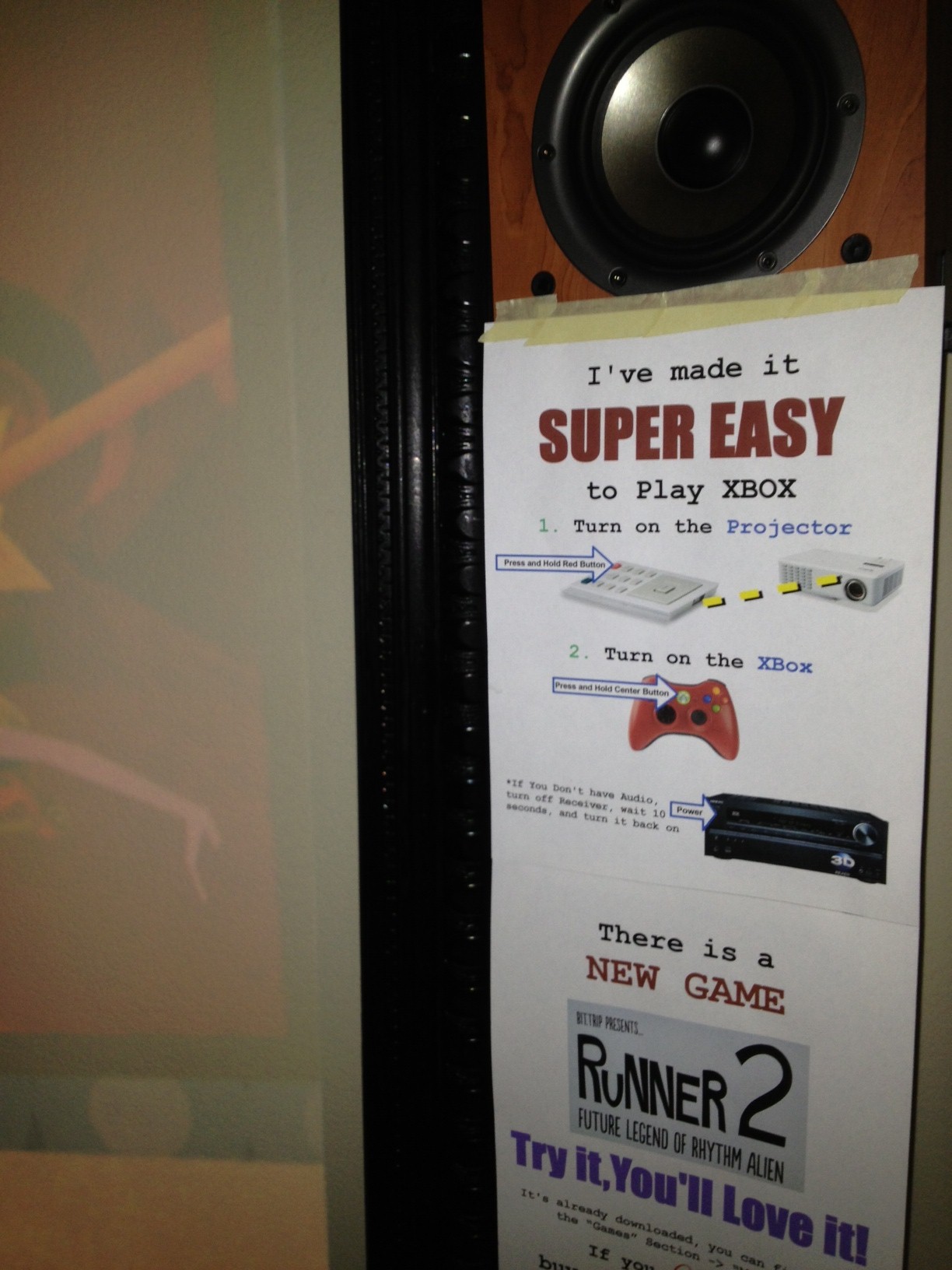
A family member leaves a job aid easily followed to use technology while the "savvy" person is away

A family member leaves a job aid easily followed to use technology while the “tech-savvy” person is away

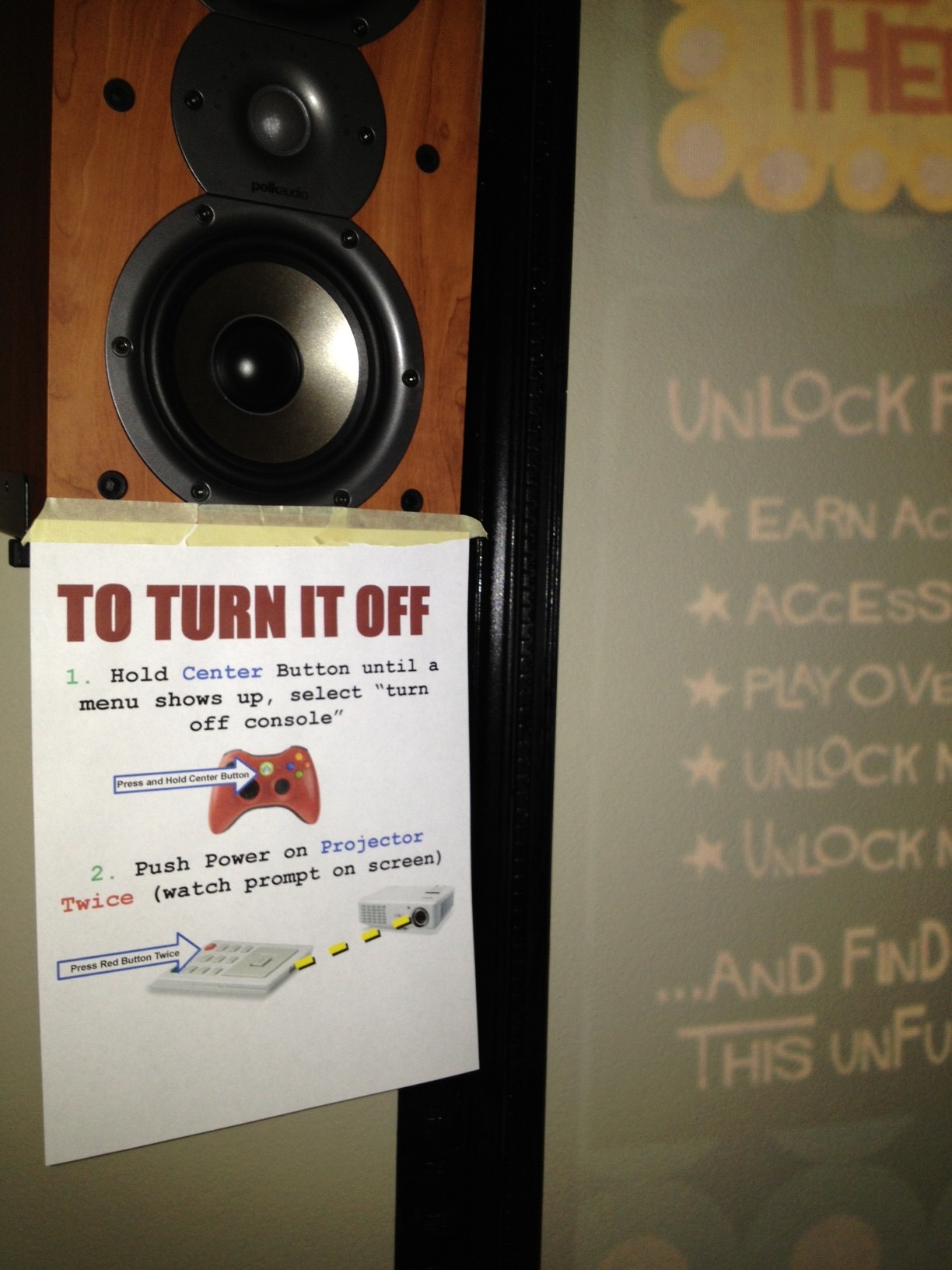
A separate job aid for turning off the system

A separate job aid for turning off the system

To begin, it is helpful to understand that although behavioral support can often be widely useful, some strategies are perceived as “for autism”, “for children”, or even “for parents only”.

At Cusp Emergence, it’s about relationships– whether with our peers, employees, employers, family members or significant others (or even ourselves).

While today’s idea (the “job aid”) is often linked with the workplace environment, this article is  about compassion and individualized support. Perhaps you’d like to experience this article as a challenge you to find yourself in one of the stories even if this week’s idea doesn’t seem immediately related to your life’s work.

Bonnie and technology: Bonnie used to avoid technology while her housemate was away. She described herself as resentful that she was often bored, never played a game by herself, or turned on the complicated computer-controlled television while alone, and claimed she never had the opportunity to learn how. Her roommate dominated the remotes when they played together and she always felt it was useless to figure out herself. It sounded strange to her friends, she knew, that she couldn’t work it. But she never had the opportunity or need or desire to do it anyway.

Joey and laundry: Joey never did laundry. Why should he; his partner (or even their son, who enjoyed that particular chore) usually did it. Sometimes he resented his slowly shrinking jeans, and often his wife tried not to resent the fact that Joey never helped. But it was honestly quite complicated, and past attempts had not gone well, producing pink underwear for everyone in the family, or shrunken, discolored sweaters.

Benny and the restroom: Benny was 15 years old and growing, and unlike most of his family and friends, he had never mastered the final steps in his toilet routine. He attended the special education program at his local school, and his paraprofessional often needed to stand at the door asking if he needed help. He usually came out with his pants down around his ankles and was instructed and guided back to the bathroom, where he was instructed to pull up his pants and turn off the light before once again entering the classroom. Often he yelled “Go away!” and slammed the door when his paraprofessional entered to assist him.

How are these stories related?

  • First, they represent situations in the client has no physical limitations preventing him or her from accomplishing the task. In addition,

  • The stories all involve communication partners, life partners, or an activity partner completing some or all of the task involved, instead of the client completing it himself or herself.
  • In each of these situations, there was a “learning history” in which the partner had TRIED to communicate how, why, and when to do these tasks. But the communication had not been effective! Parents and partners often try repeating instructions, yelling, or standing beside their partner naming every next step.
  • Finally, these situations all hold hidden potential payoffs if clients learned to do these things themselves.

Consider:

  • If Bonnie used technology by herself, she could have a greater variety of enjoyable things to do while her partner was away. She might be able to develop individual interests. She might have time to practice alone and therefore enjoy the activity even more when they did it together later. She could feel good about being an active participant in the household.
  • If Joey did the laundry by himself, he could enjoy wearing what he wanted or needed to wear without someone else needing to do it, having to stop something they needed to do in order to fulfill his request. If he did it himself, he could have access to clean clothing that he had picked out. He could feel good about contributing to the household.
  • If Joshua finished his routine in the bathroom and came out to rejoin the group, he could enjoy doing it by himself. He could feel good about doing it himself and joining the social expectations of his group. He could immediately transition to a new activity with his friends, instead of feeling embarrassment as others laughed or pointed to his pants around his ankles.

In every case above, job aids provided compassionate, individualized assistance to bridge the gap between the need to complete a task, and the actual execution of that task.

Toward solutions

Bonnie’s partner whipped up a set of easy-to-follow job aids that helped her navigate quickly through technology that previously had seemed mystifying. When her partner was out of town, Bonnie now used it herself and enjoyed the freedom.

Joey’s partner posted easy job aids (post-it notes) above the laundry machines. When his partner was out of town it was easy to see what to wash together or separate, which buttons to push, and how hot or cold the water needed to be.

Joshua’s paraprofessional and teacher posted reminders near the bathroom door that visually reminded him to check his pants and zipper and turn out the light.

Here are some of the potential benefits Bonnie, Joey, and Joshua may begin to enjoy:

  • Ability to meet a need or want alone
  • Gain more control over their life
  • The chance to gain mastery over something they will likely need to do in the future
  • The ability to rely on themselves instead on someone else
  • Increased range of options at any one time
  • Decreased dependence on others
  • Dignity, autonomy, confidence, etc

A final note: After we begin to do more for ourselves, it is compassionate for our life partners, parenting partners, communication partners, peers, or providers to consider the importance of whether, how, when, and why they will fade out their assistance. More to come on this topic in a future post!

HELP- There’s a monster in my toybox!

06 Wednesday Feb 2013

Posted by kolubcbad in Autism, Behavior Analysis, Community, Early Intervention, Education, play, Rett's, Social Interaction

≈ Leave a comment

Tags

autism, behavior support, early intervention, individualized, play, social emotional support

Part 1 of Series: Helping caregivers and teachers support children to meet fearful challenges

Shannon’s Story

Shannon and Gina sat in a free play area near their preschool teacher. “SQUAWK!” came the loud animal sound when Gina pushed the button on a new toy. As the toy noise grew louder, Shannon’s eyes opened wider and wider until she froze, a look of sheer terror on her face. She started to back away and wailed, sinking onto the floor and crying.”Oh no,” gasped her teacher. “Put that toy away!” While Shannon cried, their teacher pulled Gina aside and said “I’m sorry, but Shannon is afraid of that toy. Next time we will remember to play with it when she’s in another room.”

Devon’s Mom’s Dilemma

Devon and his mom Jenny walked down the sidewalk with their next door neighbors. As they neared the playground, Devon suddenly grabbed his mother’s skirt tightly and shrieked. “NO BIRDIES! NO DOGGIES!” At this, Jenny’s face grew red as she picked up Devon and held him tightly. She looked at her neighbor helplessly and apologized: “I’m just so sorry… We can’t go any further with you. He’s been doing this every time. He has this issue with ducks and dogs and birds now. I think even if we don’t see one he’ll be afraid one might get him.”

Toward more supportive, long term strategies

At first, it may seem supportive to shield a child from their fears.

But both teachers and parents want and need solutions that will ultimately help children face and overcome challenges. So when there is a question, especially when a particular strategy feels good or soothing or produces relief in the short term, it’s a good idea to ask ourselves, “is this procedure also supportive in the long term?”

If not, how can Shannon’s teacher and Devon’s mom learn a more therapeutic approach? And why is that important? Let’s review these scenarios again, to better understand why and how to take a supportive long term approach. What might Shannon’s interaction with the toy, and Devon’s interaction with park creatures, have in common?

First, these scenarios are similar in how they are resolved.

In both interactions, a pattern is being established: the child first encounters a fear, or “fear inducing stimulus”, and then others respond by helping the child to escape or avoid it.

Second, these scenarios are similar in how they affect other people.

From the perspective of Shannon’s peers, her inability to play with that toy meant that they couldn’t either, at least not when she was around. From the perspective of Devon’s neighbor, the neighborhood kids couldn’t play with Devon in a park. This concept, the idea that Devon can’t play in the park, and that Shannon can’t play with toys that make animal sounds, limits interaction opportunities. It also risks changing the way peers think about approaching Shannon and Devon.

Third, these scenarios have similar “reductive” effects on the children’s “repertoire” or world. Have you ever met a family member or caregiver who says, “we used to love to do ___” but we can’t anymore”? Perhaps a family used to go to the movies, or out to dinner, or have friends over, or go to museums, or go hiking. During the initial conversation with families, that blank is filled in by all the things they need to avoid now because of fears of how people will react, fears that it won’t go well, fears that it will be too difficult, embarrassing, or noisy. Often those fears are REAL at the time! Perhaps people DID stare and talk at church when a family’s child loudly refused to stop standing on the pew. Perhaps all the teachers and mothers DID stare and talk in the parking lot as a child disrobed in public and threw a tantrum before leaving the store. Perhaps it WILL be difficult, embarrassing, or noisy. But keep reading. We can do this together.

Fourth, understand it’s a cycle: handling scenarios by allowing “fear habits” to persist, allows learners to skip learning opportunities and continue to repeat old harmful habits instead.

If Shannon and Devon can’t play with certain toys or in certain places, they have reduced opportunities to learn about those things and places, and no opportunity to learn that they are NOT scary.

Fifth, if these scenarios become habits, they make it more difficult for the child to handle or face similar or other fears in the future. These situations do not teach the child how to be more successful in coping with scary, new or different events.

Bottom Line: Instead of stopping or thwarting learning opportunities, we can expand them.

Come back Friday to learn how!

Build-Your-Own-Workshop

04 Tuesday Dec 2012

Posted by kolubcbad in Autism, Behavior Analysis, Community, Education, Uncategorized

≈ Leave a comment

Tags

autism, early intervention, education, family, play, social emotional support, workshop

Cusp Emergence is excited to offer a Build-Your-Own-Workshop feature to families, groups, and communities.

1. Consider what your workshop will address, and why you need a workshop.

  • Need to learn general ways to provide social, emotional, and behavioral support?

  • Need to practice behavior management for specific behavior challenges?

  • Need to teach your family or group about managing a particular behavior challenge?

  • Need to support a student or family or community member with cognitive or developmental challenges?

  • Want to know more about how social-emotional and behavioral wellness relate to physical health?

  • Want to learn a particular technique (for example, for teaching skills or shaping language, appropriate behavior, play, or social interaction)?

    2. Think about who will participate, where you’d like the workshop, and how long your group would like the workshop to be

    3. Contact Cusp Emergence!

CONTACT CUSP EMERGENCE:
720.263.CUSP

Social Emotional Support: Part 3 (How does it work?)

15 Thursday Nov 2012

Posted by kolubcbad in Autism, Behavior Analysis, Behavioral Cusp, Community, Early Intervention, Social Interaction, Uncategorized

≈ Leave a comment

Tags

autism, early intervention, individualized, intensity, S/E, social emotional support

Social Emotional Support should be practical, and fit into a child’s family routine or team involvement.

How does Social Emotional Support work with other therapies? Does it replace Speech Therapy?
Social Emotional Support can complement, but does not usually replace, therapy by an experienced, licensed and trained speech therapist, especially if the child is diagnosed with an issue that would benefit from Speech Therapy. Instead, S/E can facilitate other therapies the child is already receiving, and brings a therapeutic perspective that can enhance the benefit of Speech, Occupational, Physical, or other supports. For example, some children may use dangerous or unsafe behaviors, or escape from unbearable or undesirable situations after inappropriate behavior. Other children benefit from learning how to “turn down” or “turn up” sensory stimulation, without using unsafe behavior. They can learn safe ways to express that there is too much, too little, or uncomfortable stimulation. We can help other therapists to integrate behavioral wellness into their sessions, and how to incorporate motivation and timing and behavior techniques into their strategies. Note: Some of the most powerful technologies in teaching children with autism (and diverse learners worldwide) have been generated by behavior analysts who collaborate with, or have backgrounds in, speech and language therapy. (PECS, or the Picture Exchange Communication System, is a good example of this.)

How do we do it?
Step 1: Assessment
A behavior analyst as S/E provider can assess a child’s strengths, challenging behavior, and family’s concerns, then generate individualized strategies to support the child’s growth. Often an assessment called an FBA, or Functional Behavior Assessment, is conducted over a couple of weeks to understand the reasons and ways that the environment is contributing to the child’s challenges. We learn what situations are most difficult and how to address them by strengthening more appropriate and successful alternative ways for learners to meet their needs.

Step 2: Collaborate
Next, we team with the child’s family and other providers or community members. We use a collaborative strength-based service model to determine measurable goals the child will meet by learning new skills, behaviors, and new ways to use their strengths. Then we discuss ways (strategies) that will be used to get there.

Step 3: Teach family and therapists to use consistent strategies; monitor strategy effectiveness
Collaboration results in setting measurable goals and developing a plan listing specific strategies families will use to meet the goal.

Families often ask whether we use individualized strategies or apply the same kind of support to every child.
We use individualized support. There are also many core “evidence-based” strategies that we use because research and practical application consistently shows they benefit children with autism and related challenges. Read more about the EI Colorado recommended strategies here.

Step 4: Support the child’s transition out of early intervention.
This step involves thoughtful planning for how the child and family will move to the next steps and environments as needed. Local agencies partner with schools to provide families with options for continued therapies in preschool if needed. Social emotional support providers can work with families to put the currently effective strategies in writing to share with important new people in the child’s life. Some families benefit from continued consultation from a BCBA, who can help teach preschool teachers and therapists how to keep making progress by providing continued individualized support based on the child’s needs. (Check out a previous related post on supporting a child’s transition).

Social Emotional Support and Intensity of Behavior Analytic Intervention
Although intensive intervention is recommended and effective for building skills and relationships with children with autism, the intensive aspect of intervention is not characteristic of the time-limited S/E support under Early Intervention Colorado’s guidelines. Instead, this model provides a brief assessment as needed followed by an hour or so of weekly therapy with the child that consistently includes caregiver education. By focusing on engineering change in families and team members, we set caregivers up to learn preventative successful techniques to support their child’s speech, motor, play, self-help and social skills.

Workshop on Social Emotional Support: Broomfield Early Childhood Council Annual Summit

08 Thursday Nov 2012

Posted by kolubcbad in Autism, Behavior Analysis, Community, Early Intervention, Social Interaction, Uncategorized

≈ Leave a comment


What does Social Emotional support mean to you?

What might it mean to someone you love?

As a provider of Social Emotional Support in Colorado, I help families establish nurturing relationships, and construct therapeutic environments. I do this through building supportive networks of team members, teaching others to implement preventative strategies to facilitate language, develop play and leisure skills, and make rich social interaction a part of everyday life.

This work is all about teaming, collaborating, and sharing solutions with families and their community. So I’m grateful for the opportunity to collaborate with the Broomfield Early Childhood Council, which does great work connecting children, their childcare providers, and families to community resources. I was honored to provide a workshop on Social Emotional Support during their recent annual summit.

Read more

The Behavior Cusp: A special instance of behavior change

30 Tuesday Oct 2012

Posted by kolubcbad in Behavior Analysis, Behavioral Cusp, Community, Education, Emergence, Social Interaction, Uncategorized

≈ Leave a comment

Tags

behavior analysis, behavior cusp, building cooperative behavior, cusp, Don Baer, emergence, Jesus Rosales-Ruiz

“a cusp is a special instance of behavior change, a change crucial to what can come next”

~ Rosales-Ruiz and Baer, 1997

Behavior analysts define behavioral cusps as changes that have special features and special effects. Experiencing a behavioral cusp (examples to follow) exposes the learner to new reinforcers, new reinforcing environments and relationships, and gives rise to “generativeness”. In other words, after a learner has experienced a behavioral cusp, she may have access to richer experiences that may become enjoyable themselves or simply make it possible to access even more experiences and environments.

Learner example: A child experiences a behavior cusp

Timmy is a learner with communication delay and limited gross motor skills. He was two years old before he could use purposeful movements with his hands; it was frustrating for him to wave and gesture without others understanding “what he meant”. His mother often wore a desperate expression as she wondered what he needed or wanted, and as he screamed for hours on end she often exhausted her ideas and ended up holding him tightly and rocking him, still unable to understand but too tired to work on it anymore that day. One day, Timmy was able to extend his finger to point, and his mother understood exactly what he pointed at! She provided it immediately, and Timmy relaxed and smiled. They went around the apartment together, his mother joyfully exclaiming to name the things Timmy pointed at. A barrier was broken! A behavioral cusp, pointing at objects, had occurred and Timmy was now able to communicate with much less frustration. From there, he progressed within months to being able to point at different pictures on the same page. Timmy’s mother is thrilled to understand what he needs, and Timmy’s inconsolable screaming for hours at a time no longer occurs on a daily basis.

Learner example: An adult provider experiences a behavior cusp

Jean is a daycare provider. She has struggled with behavior management in her private daycare classroom, as children hit and bite each other at least weekly and often daily. Her management team has a no tolerance policy for these behaviors, but Jean and her co-workers in the classroom still wonder how to stop the behavior without constantly reprimanding the children. One weekend, Jean attended a seminar on positive parenting. She had planned to use the techniques with her teenage son, and was surprised when she listened to the instructor describe that the “attention pivot” technique was also useful in the classroom when children were motivated to acquire the attention of teachers. Jean implemented the technique in her daycare the next day, and by changing just one thing- the timing of when she began talking and turning toward a child – the everyday behaviors of pushing, whining, climbing on tables, and throwing toys diminished. Even more exciting to Jean, they diminished in less than an hour, and Jean’s classroom helpers easily saw what had changed in Jean’s technique. When she saw a child looking at another student who had a toy, Jean used to observe and wait until she needed to intervene (or stop the student from yanking it away). She used to say “stop!” or “No! We need to SHARE!” multiple times per day. After Jean changed her timing, she now turns to a child BEFORE “misbehavior” and she catches the child doing the right thing. When the other teachers noticed what had changed, they began trying it themselves, and soon the number of hitting and biting episodes had decreased to a rare few times per month, instead of daily.

The point of the story:

Sometimes behavior cusps occur on their own, during development. Other times, it becomes important for someone to assist a learner experience a cusp. In Timmy’s example, the cusp was engineered by providing many, many opportunities to practice the steps needed before pointing, and the behavior analyst used fluency training and shaping to provide this practice and make it enjoyable for Timmy.

DISCLAIMER: The preceding stories, and others on this site, are simply examples or vignettes; they do not constitute training, supervision, or a behavior plan. The resources on this site are not developed for a specific individual. It is recommended that before implementing any technique described here or in resources available on this site, a reader consult a qualified behavior analyst with experience related to the appropriate field and population.

RESOURCE: Check Imagine!’s calendar often for upcoming trainings.
Dr. Jeff Kupfer, Ph.D., BCBA-D, provides “Building Cooperative Behavior” class free to the Boulder and Broomfield communities on a monthly basis. Locations, times and contact information can be found on the Imagine! calendar (search for “Building Cooperative Behavior”).

http://www.imaginecolorado.org/Calendar.htm

Upcoming speaking engagements

13 Monday Aug 2012

Posted by kolubcbad in Autism, Behavior Analysis, Community, Early Intervention, Social Interaction, Uncategorized

≈ Leave a comment

Dr. Kolu is excited to partner with Broomfield Early Childhood Council to present at the 2012 Early Childhood Summit in Thornton, Colorado in November 2012. Dr. Kolu will speak about her experience collaborating with early intervention providers and families, in a workshop called “Socio-Emotional Support: Who, What, Where, When, and How?” Stay tuned for more information on this exciting topic affecting families with young children.

Newer posts →

Recent Posts

  • Lessons from a Lost Balloon: Growth, Safety, and Kindness
  • Behavioral Seismology
  • 10 Actions This Year: A call-in if you read Boggs et al. (2025)
  • Understanding Values: The Connection to Context and Action
  • I love you more than biscuits

Archives

  • July 2025
  • May 2025
  • November 2024
  • February 2024
  • June 2023
  • April 2023
  • March 2023
  • October 2022
  • February 2022
  • October 2021
  • August 2021
  • February 2021
  • September 2020
  • May 2020
  • March 2020
  • November 2019
  • September 2019
  • June 2019
  • January 2019
  • November 2018
  • October 2018
  • September 2018
  • July 2018
  • May 2018
  • April 2018
  • March 2018
  • February 2018
  • October 2017
  • September 2017
  • August 2017
  • July 2017
  • May 2016
  • September 2014
  • July 2013
  • June 2013
  • May 2013
  • April 2013
  • March 2013
  • February 2013
  • January 2013
  • December 2012
  • November 2012
  • October 2012
  • August 2012

Categories

  • About
  • acquisition
  • adults
  • Autism
  • BABA
  • BACB CEU
  • Behavior Analysis
  • behavior cusp
  • Behavioral Cusp
  • boundaries of competence
  • buffers and barriers
  • CASA
  • CEU
  • children
  • collaboration
  • Community
  • conferences
  • contextual fear conditioning
  • continuing education
  • contraindicated procedures
  • coronavirus
  • Court Appointed Special Advocate
  • Covid-19
  • Cusp Emergence University
  • CuspEmergenceUniversity
  • data
  • dementia
  • Early Intervention
  • edtiba
  • EDTIBA10
  • Education
  • Education and Trauma-Informed Behavior Analysis
  • elopement
  • Emergence
  • enriched environment
  • ethics
  • extinction
  • FAS
  • FASD
  • Fetal Alcohol Spectrum Disorders
  • flood
  • functional alternative behavior
  • hospital
  • hurricane
  • job aids
  • learning
  • mental health
  • Neuroscience
  • play
  • podcast
  • praise
  • RAD
  • reactive attachment disorder
  • renewal effect
  • resources
  • Rett's
  • risk analysis
  • risk assessment
  • risk versus benefit analysis
  • safety skills
  • sale
  • schedules of punishment
  • self injurious behavior
  • Social Interaction
  • stimulus schedules
  • supervision
  • teaching behavior analysis
  • teaching ethics
  • TI-ABA
  • TIABA
  • TIBA
  • trauma
  • trauma-informed behavior analysis
  • Uncategorized
  • variability

Meta

  • Create account
  • Log in
  • Entries feed
  • Comments feed
  • WordPress.com

Blog at WordPress.com.

  • Subscribe Subscribed
    • Cusp Emergence
    • Join 121 other subscribers
    • Already have a WordPress.com account? Log in now.
    • Cusp Emergence
    • Subscribe Subscribed
    • Sign up
    • Log in
    • Report this content
    • View site in Reader
    • Manage subscriptions
    • Collapse this bar
 

Loading Comments...