• TIBA (Trauma-Informed BA) articles
  • Cusp Emergence in the Community
  • About Cusp Emergence
  • About Dr. Kolu
  • ETHICS
  • Cusp Emergence University
  • Resources
  • Mentorship
  • Buffers
  • Behavioral Seismology: Predicting Behavioral Needs During Hormonal Changes

Cusp Emergence

~ Collaborating ~ Consulting ~ Constructing Repertoires

Cusp Emergence

Author Archives: kolubcbad

To the parents and therapists on our clients’ teams: What if this was your child with autism?

26 Friday Apr 2013

Posted by kolubcbad in Uncategorized

≈ 1 Comment

Tags

augmentative communication, autism, contingent access, cusp, typing, unimaginable intelligence

Before this child was known to the world as “the girl with autism who expressed unimaginable intelligence”, she was a child who used baffling self-stimulating behaviors and could not speak. She experienced support for YEARS. Her family and team supplied hours of behavior analytic intervention. Her mother describes how hard she worked to keep language in front of her child, literally in front of her by using pictures and words to label household items- all the time. Her family describes how they tried never to give in or give up hope, ALWAYS requiring her to communicate a want or a desire before accessing that thing.

To the parents of my early intervention clients whose children are not yet verbal, whose children’s hands don’t express meaningful gestures yet, whose eyes don’t make sustained eye contact yet,

This is to you:

Have you seen this? Some of you haven’t. You can go check it out for yourself and come back in ten minutes.

Some of you already have. You contacted me and we both watched videos in the comfort of our own homes. There were tears in separate houses that night as we struggled to make sense of this.

My letter is to you, parents who have a child with unimaginable potential that is often unexpressed. My letter is to you, parents who hope and see results weekly but then by Wednesday are daunted by all there is to do, and understand that there is still so far to go. This letter is to you, mothers and fathers who are taking my suggestions literally when I ask you to arrange a therapeutic environment all day.

What can we say about the years of therapy, and how they affected the future person your child will grow up to be?

The girl in the video spoke with incredible intelligence and beauty. At first her fine motor actions looked laborious, and we were not sure if she was being assisted. And then we saw her words across years, settings, situations with someone sitting beside her or not. We, her viewers, watched as with strength and persistence she typed and typed, as long as it took hunting the keys with halting hands. She began to describe her feelings about being in her body, how difficult it was to coordinate her brain and actions, how it felt to experience the sensory world, why she felt she needed to throw her body against a surface… and she joked around with her father. He agonized over this. He has his daughter back. But after all these years… imagine what he went through before her “breakthrough”, before she experienced the behavioral cusp of learning to type, which opened up new worlds of reinforcement—and access to the verbal community. Think of all the years of childhood and adolescence and more than a decade of not knowing she could understand him. How long had she understood language before being able to communicate herself, we wonder.

What made the difference for her?

When this young lady was a little girl, and even as she was learning to type, her family and team of therapists emphasized she needed to use communication before accessing what she wanted. This was not meant to be cruel- it gave her the countless opportunities to practice the experience of expressing what she wanted before she got it. Requiring it every time was difficult, I’m sure. It takes work, every day, to use naturalistic strategies to make SURE a child communicates before accessing things she needs or wants as the day proceeds. Make sure that access to preferred or needed events, is CONTINGENT on a social interaction in which the child requests the event.  Stick to it. Accept only the best approximation the child can make in the moment. Be consistent but also flexible, insuring the child can ALWAYS make a communication attempt during an interaction. (Understand that sometimes a moment is more difficult and there is more going on and you might temporarily accept less than you did this morning, knowing you will come back to the better approximation, and the child will be able to do it. If the child can look and use a word to request his favorite train, but today he is only making a sound, we can accept the sound right now. But in a few minutes we can model “train!” as we hold the train out. As he reaches for the train, wait a moment until he tries to say “train” and deliver the train.)

To support kids that may grow up to use a communication system like typing or an ipad:

We can use contingent access when they are young, to insure that when they are around adults, they get countless opportunities to practice doing something social and communicative, before their environment changes and they get what they want and need.

We need to gently let them know looking at others means good things, not bad things, are coming. We need to remember to say their names when we catch them looking at us or happily playing or engaged, not just when we need something from them.

We need to help expand their worlds, by giving them enough practice to get good at something. Practicing picture exchange once a day or twice a week won’t teach communication. Playing with a toy with your child once a week won’t build strong play skills. It’s not about the hours so much as it’s about the learning opportunities. We can teach our babysitter, the child’s grandparents, the child’s nursery school teacher, the child’s occupational therapist, or anyone- to use therapeutic interaction. Contact us (or your local behavior agency or BCBA) if your team needs more help building in therapeutic learning opportunities throughout the day.

What can we say about the children?

We hear them. We hear that they are hurting and unable to express needs, let alone express all the intelligence and beauty that is inside. We need to help them practice their best way. We need to give them a reason to express.

We want to help. We want to do our best to make sure they learn a communication system that is meaningful to them, that is the easiest to use out of all the options they’ve tried, and that allows them experience new worlds of reinforcement.

We understand that we have to start somewhere, and we know that even if the child learns to type complete sentences one day—we still needed to start here, at early intervention, with measurable units of behavior and communication that we can see changing daily.

We want to be consistent for them. We don’t want to hurt, but to support. We want to give them a way to express their pain, suffering, joy, needs, ideas. We need them to know how meaningful language is, and we have to be diligent and not give up when it’s hard.

When they’re hurting or hurting themselves, we want to find a way out. We need them to learn how to access that way out through appropriate behavior that doesn’t hurt.

When they’re not able to express what they need to, the way WE think they need to express language, we need to find other options. These other options need to be things that don’t hurt others or themselves.

We need to collaborate with therapists and families to give our best shot at developing your vocal skills, fine motor skills, and gross motor skills, so you don’t find it as effortful to communicate whether you use sign, speech, or an augmentative device.

And we need to keep trying.

To the kids, to the students, and to the adults who have not yet found their voice:

We must keep trying. You’re trying too, and we see how hard you’re working. We need to tell you that, when you’re working hard.

We know it takes more out of you than it takes out of us, when you have a meltdown or tantrum. We want to help you not have to use this to be comfortable. We need to develop an interaction language with you, so you can tell us in advance if you really need a break, are having trouble controlling your body, need some help, want to leave, or just feel terrible.

We know that CONFIDENCE makes a big difference. We can see you on the videotapes, Carly, interacting with friends, joking with your dad, introducing Temple Grandin as your idol- we can see you blossoming and we love to see that the cusp of learning to type has given you access to whole new worlds that were closed to you before. But we also see the confidence as you are able to interact with other kids your age, blog and write about helping others, and going on shows like Larry King. You are amazing, and how hard you have to try each time you communicate through typing.

We thank you for your advocacy for others.

We read the comments on your videos and understand not everyone will “get” you. We empathize with you. We see others questioning, judging, and making trite comments without knowing how hard you have to work.

Someone wrote, as you smiled and typed interacting with your therapist, that he didn’t like the way someone was giving you chips as you practiced your hard work.

But we’ve been there, we’ve had to use reinforcement to strengthen a skill that we know we need to strengthen. If there is nothing contingent on using a new skill, we know how easily it is to give up and stop using that skill. We know that you are learning to type for the meaningful access to communicating with others that it gives you, you’re not typing for chips. J But we still snack when we’re working on a book we’re writing…

We thank you for providing your perspective on how it feels. How it feels to use eye contact, use self stimulatory behavior, or struggle to type.

You are an example, a model, someone in the world that others look up to. And thank you for talking to us, Carly. What a gift you have given.

To the parents:

Thank you for your persistence.

Never give up. 

What’s next? Join local agencies for events and trainings—often free!

19 Friday Apr 2013

Posted by kolubcbad in Uncategorized

≈ Leave a comment

Tags

April 2013, autism, children, Colorado, education, events, families, May 2013, workshops

What: Cusp Emergence is joining IBHS for an upcoming FREE education and networking event for families that will recur monthly at the Imagine! John Taylor Conference center  In Lafayette. Stay tuned for more information! Meanwhile, check out some other events in our area:

What: Free training in Person Centered Thinking, courtesy of Imagine! Innovations.

When and Where: Wednesday 4/24/13 or 5/29/13 at 9-12 pm at John M. Taylor Conference Center, 1665 Coal Creek Drive, Lafayette, CO 80026

Find out more: Click here for a link to other Imagine! Events and scroll down to the date you want to attend.

What: Free presentation on Autism 101: An Introduction to Understanding Autism, courtesy of IBHS (Imagine! Behavioral Health Services) and ASC (Autism Society of Colorado)

When and Where:  Friday 4/26/13 at 10-12 at John M. Taylor Conference Center, 1665 Coal Creek Drive, Lafayette, CO 80026

Find out more: Click here for a link to other Imagine! Events and scroll down to the date you want to attend. RSVP is required.

What: All-day seminar on Empowering Families (Topics including post-diagnosis, effective communication, collaborative problem solving).

When and Where: April 27 9-4pm at Rainbow Community Center at 2140 East 88th Ave, Thornton CO, 80229.

Find out more: Contact KimNichelle Rivera at 866-213-4631 or knrivera@empowercolorado.com

What: Workshop for understanding sexualized behaviors in teens with intellectual disabilities

When and Where:  Friday May 3, 2013 from 1-4:30 pm at John M. Taylor Conference Center, 1665 Coal Creek Drive, Lafayette, CO 80026

What: Free class on Building Cooperative Behaviors

When and Where: May 14 at 8:30-1:00 pm at John M. Taylor Conference Center, 1665 Coal Creek Drive, Lafayette, CO 80026

Find out more: Click here for a link to other Imagine! Events and scroll down to the date you want to attend. RSVP is required.

What: Walk for Autism with Autism Society of Colorado

When and Where: June 9, 2013 at Infinity Park in Denver (Glendale)

Find out more here

 Still looking for more? More events  on the Imagine! Calendar include parent empowerment workshops, presentations from the Colorado Guardianship Association on Medicaid, and a symposium on caregiving and aging, all in May.

http://www.imaginecolorado.org/Calendar.htm

Learning more each year about autism

03 Wednesday Apr 2013

Posted by kolubcbad in Uncategorized

≈ 1 Comment

Tags

autism, early intervention, peer-mediated interaction, peers, social interaction, wandering

Image

Just in time for Autism Awareness Day yesterday, a new article highlighted ten things we didn’t know last year about autism. At Cusp Emergence, much of our contact is with families of young children who are either newly diagnosed, are in the early stages of treatment, or are transitioning to school placements. We are challenged by these findings daily, and we need to find new ways to help families and providers make the most of early years. You can link to the original article here. Below are some of the findings, with links to the source article for each. 

“1. High-quality early intervention for autism spectrum disorder (ASD) can do more than improve behaviors, it can improve brain function. Read more.” 

The study above examined ESDM (Early Start Denver Model) at 20 hours per week of therapy. Earlier this year we linked to additional evidence showing effects of pivotal response therapy, another set of behavioral interventions, on brain activity.

“2. Being nonverbal at age 4 does NOT mean children with autism will never speak. Research shows that most will, in fact, learn to use words, and nearly half will learn to speak fluently. Read more.”

Many students whom we have been fortunate to support, have gained language after intervention, after histories involving long-term periods of nonverbal communication.

More importantly, virtually ALL learners can make progress in functional communication, when the functions of their difficult behavior are carefully examined in the context of a strengths-based assessment. For an individual student, we discover what she needs and wants to communicate, and therapy then expands her access to, and engagement with, the world around her.

Why is it so important that we understand ALL learners can make progress with functional communication? Because it is so important to keep trying, to not give up. Years ago in a robust metroplex school district, I was an undergraduate, un-schooled, interventionist level trainer assistant for special education teachers participating in an ABA training. My first task seemed daunting: approach a student in the corner, sitting in a wheelchair alone, to discover whether she had a communication system at school, how she used it, and determine how to support teachers moving forward. This beautiful high school student remained belted in her chair looking vacantly off to one side most of the time, without a PECS system or vocal or verbal repertoire that the teachers knew of. As I built rapport with her, pairing myself with her favorite songs as we sat together in her loud classroom, I noticed she moved her hands a few seconds after I moved mine. I was practicing some basic signs as I attempted to establish communication with her. After a few minutes I noticed she was moving her hands “intentionally”, and that the signs she was making looked sort of like mine! At least, they were shape-able. We began to teach her basic signs for “music” and “eat”, and within the first week of our summer training, her teachers and paraprofessionals were struggling to grasp that this whole time, after years of sitting in her wheelchair not using expressive language, this 15 year old student was capable of sign language to communicate at least 5 basic requests. Was she capable of this the whole time? She had not used much problem behavior and, the teachers readily admitted, was not “a squeaky wheel” and did not demand much attention. 

“3. Though autism tends to be life long, some children with ASD make so much progress that they no longer meet the diagnostic criteria for autism. High quality early-intervention may be key. Read more.”

All students can learn. And when learning starts early, we often get farther!

How do you meet diagnostic criteria? By acting and behaving in ways that are consistent with the diagnostic criteria. Currently, there are no reliable biomarkers or blood tests that denote “having autism” or show where someone is “located” on a spectrum.

But while this fact is indisputable—that some children with ASD do make so much progress as to be “distinguishable” from other children who never met the diagnostic criteria—it is important to support families to understand the true life long path through supporting a family member who may have autism.

It is important to understand that there may always be new challenges that come with development, exposure to new social environments, and learning. As a parent of an 18 year old expressed to me recently, being able to plan for transitions requires being realistic and supportive even when we hoped it would all be over by now. 

“4. Many younger siblings of children with ASD have developmental delays and symptoms that fall short of an autism diagnosis, but still warrant early intervention. Read more.” 

One of the most pressing questions may be, if the delays and symptoms of younger children fall short of a diagnosis but warrant intervention, how do you fund it?

Recommendations:

  • Insure all families and practitioners in your practice or community understand that having an older sibling with autism is a risk factor for the younger siblings. Younger siblings can be referred to early intervention (in some cases, funded by a state fund in which the child can access ABA (sometimes under the label Social Emotional Support), OT, SLP, and other services to prevent falling behind in language development and social interaction.
  • Often, having an older nonverbal model in the home can prevent younger children from using skills that would otherwise emerge sooner. For example, a younger child may imitate the behaviors that result in meeting his older sibling’s needs. The younger child may imitate pulling parents around by the hand, tantruming to access food, toys or attention. The younger child also may not have adequate verbal models. So it is recommended to use powerful strategies for increasing language, with younger siblings of children with autism, even if those siblings  have no diagnosed delays.
  • Families can attend a workshop and learn skills to arrange their home environment to promote language and insure they respond consistently to behavior.
  • When families begin providing expansions and elaborations on every utterance, and using contingent access to help their children learn social interaction as a basic part of getting needs met, younger children who have been slow to develop speech, often start to talk more. 
  • If a family is considering preschool, younger siblings may benefit from a stimulating environment where language promotion and appropriate social interaction is built into the daily lives of the students. Integrated preschools for children with autism and their typically developing peers may be good options for siblings of students with autism, as the skills they practice daily at school, will be useful and powerful in their daily home lives. 

“5. Research confirms what parents have been saying about wandering and bolting by children with autism: It’s common, it’s scary, and it doesn’t result from careless parenting. Read more.”

Recommendations:

  • Families can develop a basic family safety plan that includes preventative environmental arrangements (such as latches near adult height to prevent unlocking and opening doors), preventative teaching, responsive strategies, and the family’s emergency plan. They can follow up by educating community members on their family plan, including appropriate law enforcement agencies and a responsible party in any community environment (a school, a church, a grocery store) their family member frequents. Pre-teaching can include establishing high compliance with safety instructions such as “stop” and “come here”, by strengthening these skills when it is NOT a crisis, and pre-cuing, prompting, and reinforcing appropriate behavior at all times to keep the family member ready to use safety skills.
  • Talk to your behavior analyst about how to “bring safety behavior under instructional control” and develop a plan for teaching these skills, if you have not addressed them.
  • Even though schools often refuse to initiate a behavior plan for a student with an IEP until there has been demonstrated danger, learn your rights as a parent by consulting with an advocate or reading. If elopement or wandering has occurred in the home or community, demand your student has an appropriate safety and health plan, and behavior plan with preventative components. 

“7. One of the best ways to promote social skills in grade-schoolers with autism is to teach their classmates how to befriend a person with developmental disabilities. Read more.”

If number 5 was one of the more important points for safety, THIS point may be the most powerful one in terms of potential for social interaction.

At a recent IEP meeting, we listened with disbelief to our client’s school team insist a beautiful 3 year old child simply “didn’t enjoy” his peers’ interaction, so they had given up because it was quite difficult to promote interaction. Instead, they had decided to make his school day one that was filled with 1:1 interaction with an adult. In my experience, while it is true that many children diagnosed with autism do not initially “enjoy” interaction with peers, they begin to enjoy it almost immediately when the peer is the one doing the asking! Much research supports peer mediated instruction as one of the most powerful technologies for teaching students that it is fun, useful, and easy to interact with their peers.

Teachers and schools who would like to learn easy techniques for helping peers learn to initiate to their students with autism, can sign up for the School of Play or ask their local behavior analyst for help.


Don’t make me eat a broken hamburger in public!

29 Friday Mar 2013

Posted by kolubcbad in Uncategorized

≈ 2 Comments

Tags

early intervention, food selectivity, generalization, preferences

ImageWhen I read the poignant story of the broken hamburger, my eyes teared up for two reasons.

At first, they brimmed with gratitude– the collective sort of gratitude of the hundreds of thousands of Facebook users who “liked” the story about the kindness of a chain restaurant waitress.

Thank you, waitress, who heard a mom apologetically request a second hamburger for her young daughter affected by autism.

The original burger was “broken”, she had said, and her daughter could not eat it.

Consistent with the pattern discussed in diagnostic manuals and tools used to assess or document the presence of autism, or behaviors consistent with that label, the young girl in the story “preferred sameness”, and had difficulty participating when the environment contained a salient difference– even when that difference was presented in the context of a hamburger (usually a highly preferred, even a ‘favorite’, food).

The young girl has not yet learned to approach– and to enjoy– a hamburger different from how it appeared in her normal routine.

And it’s critically important not to judge. First, the list of what we don’t know is long. For example, we don’t know, but it may be progress just to sit with the family eating at a restaurant. We don’t know how hard they may already have worked, how far their family has already come, or whether tremendous problem behavior used to occur during dinner, and a request for ‘new hamburger, mom’ was a triumph. Learning to request a break, help, or the little things that ameliorate our daily troubles like a snack, a special blanket, or a teddy bear, takes lots of practice and shaping. Second, peculiarities of childhood eating are not so unusual; a family member diagnosed with nothing that I know of, used to refuse to eat the ‘handles’ on her french fries. That’s a lot of wasted potatoes, but I’m pretty sure her mom was choosing battles carefully.

How we address this situation depends in part on how we frame it.

Do we fight battles FOR our children, or WITH our children? Is food refusal a temporary battle to be won at each meal anew, or is food exploration and acceptance a new path to be walked with families?

Back to the story’s intent. Consider the perspective of the waitstaff, who is tasked with responsibility of honoring most appropriate customer requests. Upon reflection, I remain touched by the waitress’ readiness to honor the request so the child might enjoy the hamburger.

But my eyes also teared up for another reason.

Sometimes, children live in an environment indefinitely where most things in their food repertoire don’t change, and as a practitioner, I’ve observed students go for years not being challenged while families suffer in silence. How many dinners will she endure waiting until getting home to eat, because the favorite dish was not on the menu? How many times will her family go out without her, or select to not try going out, because there may be no appropriate foods for her on the menu? She may not have the opportunity to encounter (and eventually approach) diversity, and avoidance may be strengthened each time her parents’ requests to make the food a certain way, are honored in front of her. She may even avoid birthday parties or the community, because the food and setting is so different, and there has been very little practice to become comfortable in “different” situations.

As parents of neurotypical learners often point out to me, and as the little girl in my family illustrated, preferences don’t have to make sense, they may be comical at first, there is a broad range of “normal”, and it’s up to each family to decide how to, whether, and when to address the issue of food selectivity. Does the child have such a limited range of preferred foods, that a nutritionist and doctor are concerned?

Here is a good question to ask: how does the child handle being “challenged” or presented a challenge food? Does the child prefer something so much she will refuse (and refuse to try) every variant, to the point of disruptive behavior?

If the answer is “yes”, no matter the profile of your learner, it may still be helpful to address.

We can provide practice situations in supportive environments when sampling and practicing and trying differences is made comfortable, expected, familiar and do-able.

To families raising children with limited variety of food acceptance, or who eat very low volumes of foods or eat around only one or two family members:

  1. Practice eating with others before being shocked and disappointed that the child doesn’t eat the first cupcake she’s ever seen at a birthday party.

  2. Practice situations that teach us broken hamburgers taste the same as whole ones.

  3. Practice variants of seating arrangements, food that comes on different plates and with different utensils, and foods that arrive “contaminated” with a sauce (to use the phrase of one child in feeding therapy).

  4. Doing it for the first time in a familiar environment also makes it easier, and then practicing little by little in “the real world” helps.

Cusp Emergence hosts “snack parties” that provides practice for children learning to eat in community settings or eat with others before it is time for preschool or school lunches and snacks.

It is often helpful during the transition phase, as our clients transition away from early intervention to preschool, or change from weekly feeding support with a therapist to parent-only support 

Bottom Line:

You can do it, and we can help. Practicing the hard thing makes it easier. And practicing across multiple environments and situations makes the new skill stronger!

If your family member is in feeding therapy, ask the practitioner how they are programming for generalization.

Don’t just train and hope… program actively for generalization.

Lessons from a Sensory-Friendly Stylist

20 Wednesday Mar 2013

Posted by kolubcbad in Uncategorized

≈ 3 Comments

Tags

autism, community, haircut, self-help, sensory

ImageIn a word, this stylist notices.

 As I sat in her chair and we talked, we learned about each other. She learned that I worked with persons with autism across the spectrum and across the lifespan. She learned that I was interested in her experiences with her own family members and clients with autism.

 And I started to learn more about “sensory friendly”.

 What does she notice? On one occasion, a client affected by autism sat in her chair. She noticed his hot neck, burning up and red, creeping up from his collar to his ears. She gave him a cool towel. He visibly relaxed and softened into his chair. As she provided more and more ways for him to be comfortable in her chair, the stylist also noticed what he was interested in. She shares his enthusiasm for Star Wars and the two discuss it whenever he gets a haircut. She joined with him in discussing something that interested him, and she “took his mind off” the haircut.

He learned to tolerate haircuts in his chair and now occasionally turns down the cold towel.

How important is it to be “friendly” as a business? Maybe it doesn’t seem like a life-or-death situation.

But as any parent whose child screams bloody murder at the mention of a haircut, or a dentist, knows– it feels like it sometimes. And postponing dental work until a child can be put “completely under” is expensive, and doesn’t teach coping skills for going to the dentist through the lifespan. I know many parents who do their child’s haircut in the basement, where no one can hear the screams, and where the sensory stimulation and its fallout is more controllable.

We’re fortunate in the Boulder and Broomfield area to have several excellent pediatric dentists in our area who practice friendly supportive dentistry. There are “sensory friendly” films, and autism supportive places to eat.

How is it in your area?

If you’re a business, is there a small way you can “be the change” you need in your neighborhood?

Thanks, Felicia at Finishing Touch Spa and Salon! 

 If you’re a community member, can you advocate for those small changes and value them when you see them? (The website myautismteam has a provider list and online family network).

Closing comments

“Sensory” and “Behavior” are both misunderstood concepts, especially when people equate “sensory” or “behavior” to something intrinsically negative, or when people use “sensory” or “behavior” as an explanation for something else. When someone says “he had a behavior” or “it was sensory”, we haven’t explained anything.

Perhaps when a behavior analyst pays attention to how a person interacts with his environment, that behavior analyst is interested in the sensing of stimuli.

Perhaps when a sensory friendly teacher pays attention to how a student is affected by sensory stimulation, that teacher is interested in behavior.

The sensory-friendly stylist paid close attention to how her client’s facial expressions, body rigidity, tenseness, nervousness, fidgeting, breathing, and rapidity or fluidity of speech changed when she modified or provided sensory input.

 In a word, she noticed.

Got PRT?

13 Wednesday Mar 2013

Posted by kolubcbad in Uncategorized

≈ Leave a comment

Tags

autism, evidence-based treatment, pivotal response treatment, pivotal skills, PRT, social interaction

Behavioral intervention can impact brain function! Does your BCBA, school, or home behavior team use PRT?

Image

Have you heard?

Many of our community partners recently shared the new article on how behavioral intervention for children with autism can impact brain function. But what kind of behavioral intervention was actually studied? This was NOT 20-40 hours of discrete trial therapy per week. No, the children benefiting from behavior intervention received 8-10 hours weekly PRT, or Pivotal Response Treatment. Does your BCBA, school, or home behavior team use PRT?

What is PRT? PRT stands for “Pivotal Response Treatment” or “Pivotal Response Therapy”.

PRT is making news again because of growing evidence that while effecting change in the lives of children, it may also correspond to changes in their brains. But it’s not a new treatment and has been used for decades to support learners with autism. PRT uses the child’s own interests as motivation for learning more. Using PRT, students can learn how to learn from their environments and find social interaction more meaningful. PRT involves using naturalistic, family-friendly, strategies to strengthen skills that are “pivotal” for the child’s development. For example, a therapist or parent may strengthen skills that are critically important in many contexts, such as responding to multiple cues, initiating activities, and making social initiations. Outcomes of targeting pivotal skills include widespread improvement in additional areas of development, including social interaction, communication, and behavior. Ultimately, PRT is a well-studied component of behavior analytic treatment that can be used in natural settings and implemented by family members, and therapists can easily assist families to integrate PRT into their daily activities.

Learn more about PRT

An earlier version of PRT was known as the “Natural Language Paradigm”. Developers of PRT, Dr. Robert L. Koegel and Dr. Lynn Kern Koegel, have consistently produced research showing the effectiveness of strengthening pivotal responses important to social interaction and motivation. To find out more, please see their website (http://www.koegelautism.com/) for information, articles, resources, books, materials, and educational opportunities.

So how are the brains of children with autism changed by PRT? And does PRT take years to show effectiveness?

 Avery C. Voos, one of the lead authors involved in the study, stated: “The cool thing that we found was that these kids showed increased activation in regions of the brain utilized by typically developing kids.” This is consistent with reports of parents of children involved in PRT, who often notice improvements right away as they learn to incorporate the strategies in their daily lives. Corresponding changes in children’s brains likely occur that support the lasting changes in their behavior, but only recently has research directly supported this notion. Voos noted that “[a]fter four months of treatment, they’re starting to use brain regions that typically developing kids are using to process social stimuli.” The study collected information before and after children received 8 to 10 hours per week of pivotal response treatment. Although the study had many limitations, it contributes to a growing body of pioneering research exploring how and why behavioral intervention can have long term beneficial impact. To us at Cusp Emergence, one of the best reasons to use PRT is its social validity and acceptability to the parents and children with whom we’ve consulted.

Bottom Line:

Family members are easily trained in the paradigm by trained professionals or a combination of using manuals and coaching. Workshops in this technique are offered worldwide, but your local behavior analyst is often familiar with these techniques. Know a school, behavior analyst, team or family who could benefit from additional training or consulting to develop their PRT skills or apply them for a particular learner?

Contact us!


Job Aids: On Compassion, Visual Aids, and Individualizing support

06 Wednesday Mar 2013

Posted by kolubcbad in Community, job aids, play, Social Interaction

≈ 1 Comment

Tags

individualized support, job aids, neurotypical, visual support

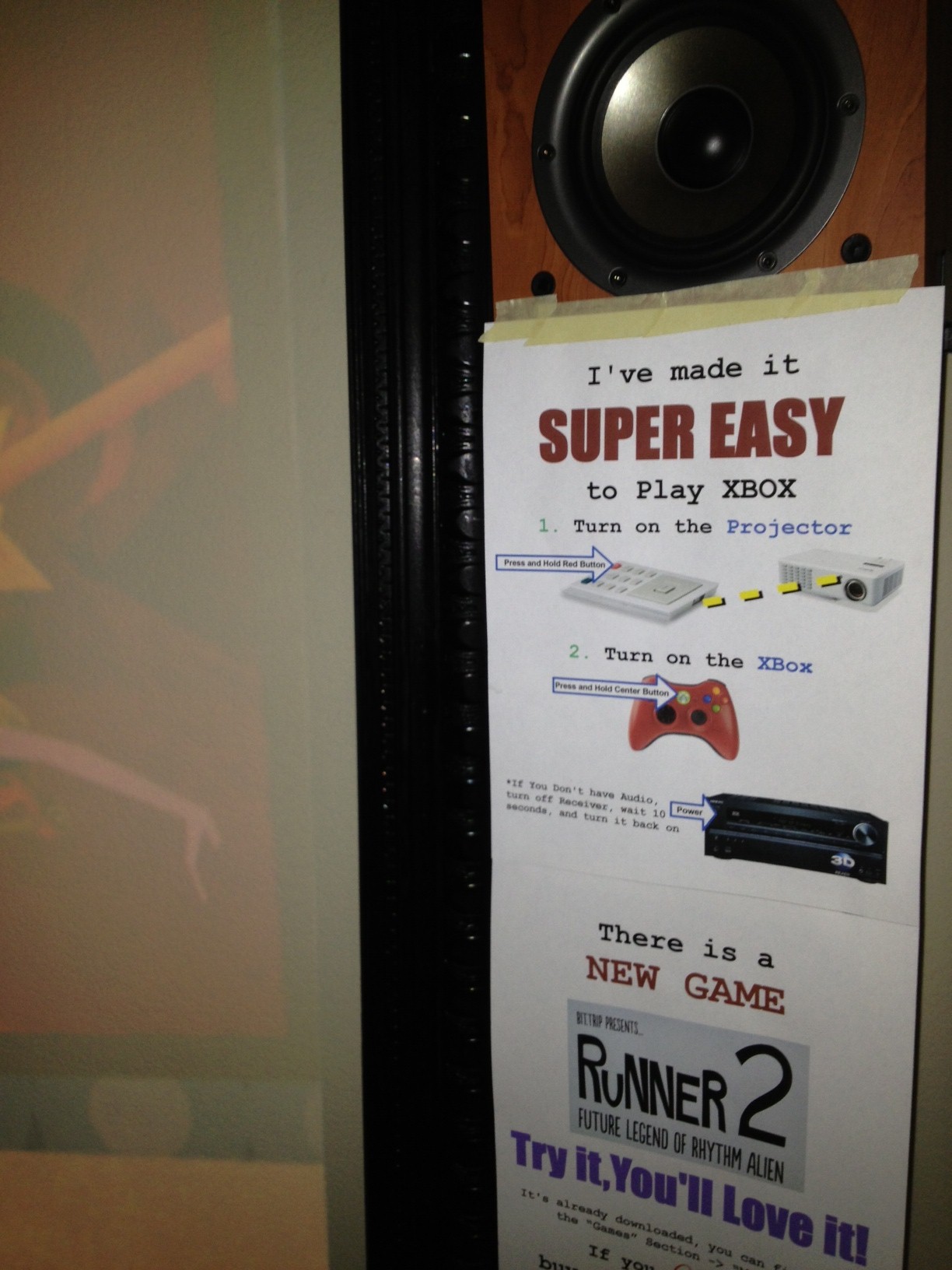
A family member leaves a job aid easily followed to use technology while the "savvy" person is away

A family member leaves a job aid easily followed to use technology while the “tech-savvy” person is away

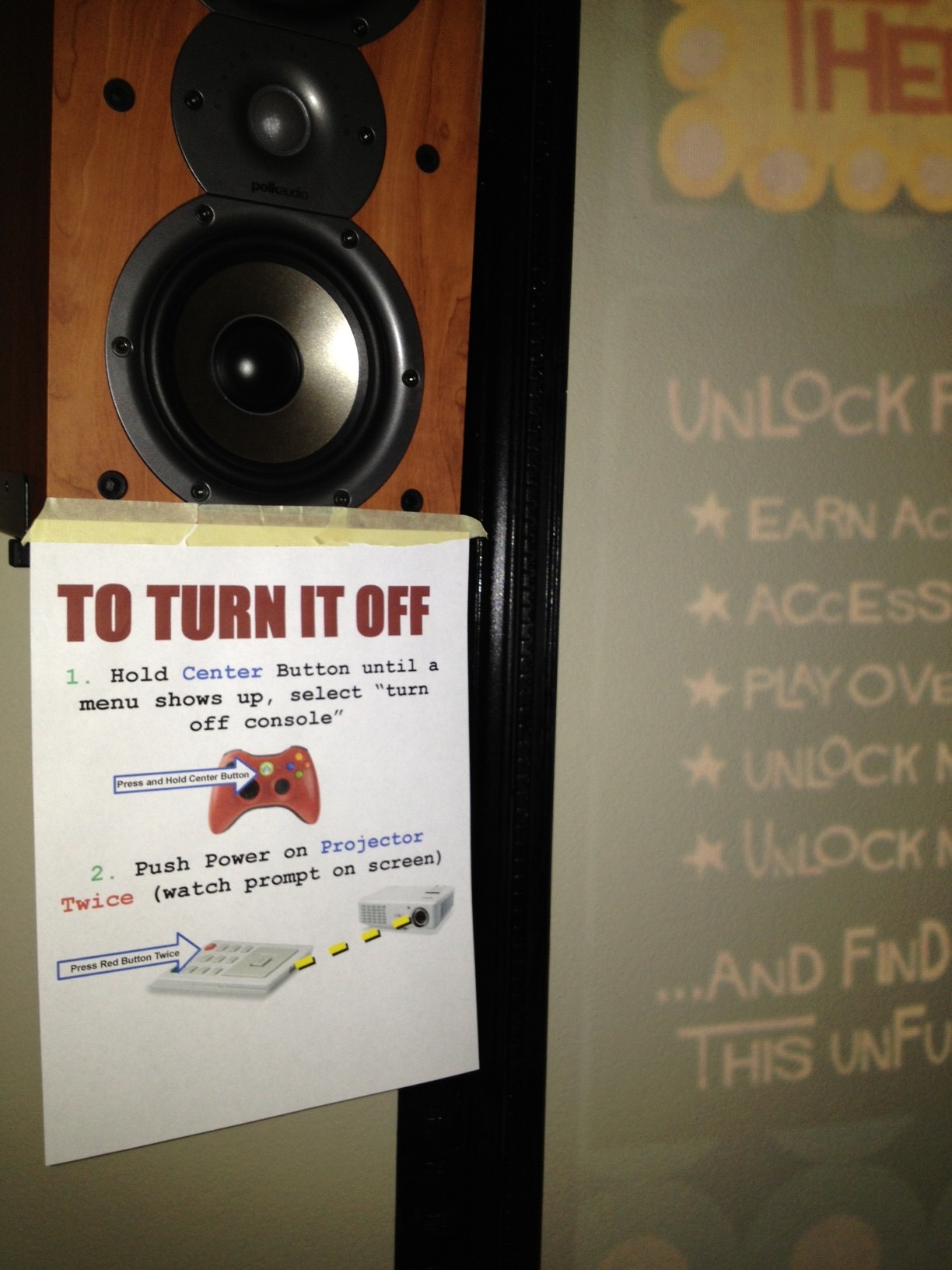
A separate job aid for turning off the system

A separate job aid for turning off the system

To begin, it is helpful to understand that although behavioral support can often be widely useful, some strategies are perceived as “for autism”, “for children”, or even “for parents only”.

At Cusp Emergence, it’s about relationships– whether with our peers, employees, employers, family members or significant others (or even ourselves).

While today’s idea (the “job aid”) is often linked with the workplace environment, this article is  about compassion and individualized support. Perhaps you’d like to experience this article as a challenge you to find yourself in one of the stories even if this week’s idea doesn’t seem immediately related to your life’s work.

Bonnie and technology: Bonnie used to avoid technology while her housemate was away. She described herself as resentful that she was often bored, never played a game by herself, or turned on the complicated computer-controlled television while alone, and claimed she never had the opportunity to learn how. Her roommate dominated the remotes when they played together and she always felt it was useless to figure out herself. It sounded strange to her friends, she knew, that she couldn’t work it. But she never had the opportunity or need or desire to do it anyway.

Joey and laundry: Joey never did laundry. Why should he; his partner (or even their son, who enjoyed that particular chore) usually did it. Sometimes he resented his slowly shrinking jeans, and often his wife tried not to resent the fact that Joey never helped. But it was honestly quite complicated, and past attempts had not gone well, producing pink underwear for everyone in the family, or shrunken, discolored sweaters.

Benny and the restroom: Benny was 15 years old and growing, and unlike most of his family and friends, he had never mastered the final steps in his toilet routine. He attended the special education program at his local school, and his paraprofessional often needed to stand at the door asking if he needed help. He usually came out with his pants down around his ankles and was instructed and guided back to the bathroom, where he was instructed to pull up his pants and turn off the light before once again entering the classroom. Often he yelled “Go away!” and slammed the door when his paraprofessional entered to assist him.

How are these stories related?

  • First, they represent situations in the client has no physical limitations preventing him or her from accomplishing the task. In addition,

  • The stories all involve communication partners, life partners, or an activity partner completing some or all of the task involved, instead of the client completing it himself or herself.
  • In each of these situations, there was a “learning history” in which the partner had TRIED to communicate how, why, and when to do these tasks. But the communication had not been effective! Parents and partners often try repeating instructions, yelling, or standing beside their partner naming every next step.
  • Finally, these situations all hold hidden potential payoffs if clients learned to do these things themselves.

Consider:

  • If Bonnie used technology by herself, she could have a greater variety of enjoyable things to do while her partner was away. She might be able to develop individual interests. She might have time to practice alone and therefore enjoy the activity even more when they did it together later. She could feel good about being an active participant in the household.
  • If Joey did the laundry by himself, he could enjoy wearing what he wanted or needed to wear without someone else needing to do it, having to stop something they needed to do in order to fulfill his request. If he did it himself, he could have access to clean clothing that he had picked out. He could feel good about contributing to the household.
  • If Joshua finished his routine in the bathroom and came out to rejoin the group, he could enjoy doing it by himself. He could feel good about doing it himself and joining the social expectations of his group. He could immediately transition to a new activity with his friends, instead of feeling embarrassment as others laughed or pointed to his pants around his ankles.

In every case above, job aids provided compassionate, individualized assistance to bridge the gap between the need to complete a task, and the actual execution of that task.

Toward solutions

Bonnie’s partner whipped up a set of easy-to-follow job aids that helped her navigate quickly through technology that previously had seemed mystifying. When her partner was out of town, Bonnie now used it herself and enjoyed the freedom.

Joey’s partner posted easy job aids (post-it notes) above the laundry machines. When his partner was out of town it was easy to see what to wash together or separate, which buttons to push, and how hot or cold the water needed to be.

Joshua’s paraprofessional and teacher posted reminders near the bathroom door that visually reminded him to check his pants and zipper and turn out the light.

Here are some of the potential benefits Bonnie, Joey, and Joshua may begin to enjoy:

  • Ability to meet a need or want alone
  • Gain more control over their life
  • The chance to gain mastery over something they will likely need to do in the future
  • The ability to rely on themselves instead on someone else
  • Increased range of options at any one time
  • Decreased dependence on others
  • Dignity, autonomy, confidence, etc

A final note: After we begin to do more for ourselves, it is compassionate for our life partners, parenting partners, communication partners, peers, or providers to consider the importance of whether, how, when, and why they will fade out their assistance. More to come on this topic in a future post!

I’m done with this; now where do I put it?

13 Wednesday Feb 2013

Posted by kolubcbad in Behavior Analysis, Behavioral Cusp, Early Intervention, Education

≈ 2 Comments

Tags

behavioral cusp, clean up, family empowerment coaching, give clear instructions

This is a story about a little girl, about five years old. Before she learned where things went, she learned where they DIDN’T go.

(First, a note to the teacher or student in all of us: Do you notice that adults often tell us what NOT to do? Sometimes it’s easier for adults to think about what NOT to do than what TO do.

But do you also notice that when little children hear what NOT to do, they don’t automatically understand what TO do?

This makes sense!

If it’s hard for US to articulate, it’s even more difficult for children or students to understand.

It takes practice, but you can learn to give almost ALL instructions or requests, in a way that lets the person know exactly what to do.

It’s the first lesson of being a great therapist, and it’s better than wishing a significant other could read your mind.

And you can do it. These stories show two different ways this strategy could be used.)

Carlie was a little artist and avid reader, and with alone time, loved nothing better than taking out ALL the art supplies, all the stuffed animals who needed to watch, and surrounding herself in the bedroom with piles and piles of STUFF. She changed clothes often, and changed shoes just as often, and the piles grew every afternoon.

Often at night, before getting tucked into bed, she scrambled to push the piles to the corners, and artfully arranged pillows over the piles. Other piles she pushed under her bed, where a perfectly positioned bedskirt hid them from mama’s eyes during a bedtime story or conversation about kids at kindergarten that day.

And it worked for a while. But one rainy Saturday morning, her other chores were all finished, and Mama said the dreaded phrase: “Why don’t you clean your room? I can help if you need me to.”

No! Not the offer to help! And sure enough, the little girl sat sobbing on the floor for what seemed like hours, as Mama lay on the bed, sometimes only her feet showing, as she pulled out pile after pile of clothing, moldy bowls and cups, ruined art projects and half-eaten cereal science projects. And the little girl was embarrassed, for now Mama knew her messy (somewhat naughty) secret.

But wait!

Now that Mama knew the secret, Mama could solve the problem. Now she knew that the REAL secret was this: The little girl, even after all this time, had no idea where to put things! At least, it hadn’t “stuck”. Now, Mama and the little girl organized the room TOGETHER. The little girl decided where everything went. Mama helped her make places for things: they hung up a net for stuffed animals, Carlie made colorful signs labeling spots for books, art supplies, and even “things to take to the kitchen”! Now she had a place to put everything. And Mama had a much more specific way to help. Saying “clean up your room” hadn’t usually resulted in a clean room. Instead, saying “put everything back where it goes” somehow made a huge difference for Carlie.

It’s not that hard, unusual, or impressive. 

But if you’re not already helping kids figure out where they CAN put things, try it: it’s a lot easier to clean up when you do!

It’s true for their behavior too.

A couple of years ago, three year old Carlie had just graduated to a “big girl seat” but was kicking at the breakfast table. Every day mom threatened to put her back in her “little girl”seat and every breakfast ended in tears with Carlie back in her “little girl” seat.

But wait, thought Carlie’s mom. She’d just enrolled in a parenting course, and remembered to apply a strategy from class. “Where CAN Carlie kick? When can she kick? Who will play with her? And most importantly… what can Carlie do at breakfast, INSTEAD?”

Fast forward 1 day. Carlie’s mom has purchased a tiny stool. Carlie’s feet rest there. Each breakfast begins with a happy discussion of what she can do with her feet. She can put them on the stool! Then they discuss what they can do after breakfast. We can go outside in the yard and play ball! We can practice our kicks, we can bring our dolls, and we can have fun!

Fast forward 2 minutes. Usually, Carlie starts kicking about 3 minutes after breakfast started. So today, Mom said “Wow, Carlie! Your feet are safe on the stool! I love it. It’s fun having breakfast with you in our big girl chairs!”

Now, this was just one example, with a minor behavior. The behaviors some parents think are problematic are not priorities to other parents. Find what will work for YOUR family or team. Cusp Emergence offers family empowerment coaching. Contact us for more information or to share your story!

Bottom Line: Give clear instructions and involve learners in creating and enjoying supportive structure or alternative behaviors, the way Carlie learned to enjoy active playtime after her breakfast, or participated in creating her bedroom’s “places to put things”.

Note: Did you wonder why this post is in the “behavior cusp” category? Giving clear instructions is so important a skill for caregivers and teachers, that I have often observed them able to access new levels of teaching and instruction when they learn how. Mastering a strategy like this can be a “cusp” for teachers and parents, making it easier to promote appropriate behavior and engagement in their families and teams.

Look! I’m playing with a monster from my toybox!

08 Friday Feb 2013

Posted by kolubcbad in Uncategorized

≈ Leave a comment

Welcome back. 

Part 2 of Helping caregivers and teachers support children to meet fearful challenges

Last time, we met Shannon and Devon. When we first met Shannon, she was crying as a peer played with a new toy. Although Shannon’s experience has been repeated with children affected by developmental challenges such as PDD-NOS, Rett’s Syndrome, or Autism, children who are typically developing may also experience a range of responsiveness to stimuli like loud noises or strange sounds. Long-term, it’s supportive to give children resources to handle inevitable changes in their environment, startling sounds like chairs scraping, animal sounds, or other children crying- especially when entering a new preschool environment! Similarly, Devon in the story struggled to face his fears of animals. His mother was afraid to take him to a park because of his fears, and yet she also wondered what would happen one day if he was invited to a friend’s birthday party in a park, or whether he would ever be able to play sports.

 Instead of stopping or thwarting learning opportunities, we can expand them.

  1. Resolve situations by providing the child experience successfully interacting with a stimulus he or she once feared. It’s great to “end on a good note”. Shannon’s program provided her many opportunities to push the toy away until she was doing it with a smile or even a laugh. When a given step wasn’t scary anymore, we moved on.

  2. Teach others to support the individual to resolve challenges and communicate (including asking for help) when needed, instead of minimizing the opportunities to interact with the challenge. Instead of moving an object away which looks scary, we can acknowledge what the student is feeling and empower her to do something about it. One of Shannon’s first major steps was learning to reach for a toy and push it away. Instead of screaming and laying down, she began to stay in the situation playing with her own toys. This allowed more teaching to occur. She even learned to take toys that had frightened her at first, and offer them to other peers who enjoyed them. Lessons about taking turns, offering choices, sharing, and helping friends find things, were now able to be enjoyed by the entire class.

  3. Broaden the child’s repertoire, instead of diminishing or limit it. After supportive strategies were used to re-introduce the toy to Shannon, she quickly learned different ways of using it. She eventually requested to play with the same toy that was scary at first. Similarly, instead of refraining from visiting or discussing parks, Devon’s mom learned to provide many opportunities to do park related activities, and Devon ultimately began to enjoy them.

  4. Build in learning opportunities to help the child deal with the fear, making it possible to enjoy activities that were off-limits before. Does the child have the skills to access (or ask for) assistance, a break, materials or calming activities? If the child is practicing something that is difficult, does s/he understand when this try will be over? Does s/he understand what she can do for this try to be successful? Does s/he know what will happen next? Devon had a safe space where he could sit down and take a chill out break if he became too scared to be near the creatures. He learned to request appropriately to leave the park, instead of screaming and kicking and pulling her clothes (which usually happened in the past). He also learned to stay and play for longer periods of time, and eventually was able to play in the park even if a dog played nearby.

  5. Enlist others to help if necessary, to help a parent or other caregiver through stressful or anxiety-involved times as the program begins. If a child has been avoiding or escaping fearful situations by using screaming and tantrums to refuse, it may be necessary to enlist the support of a behavior analyst or specialist to identify specific strategies and build a program helpful for the individual child and his or her history. And parents can face challenges especially when helping a child to follow through on trying a thing he previously refused with inappropriate behavior. “Helpful” community members may cause further distress when parents help their child face these fears in public. Devon’s mom introduced him to the park again during visits with a behavior analyst providing supportive coaching. But this can be practiced with a sibling, babysitter, parent or grandparent, too. Similarly, Shannon’s parents and preschool teachers were all able to implement supportive procedures after a quick review with her behavior analyst.

Bottom Line: Facing the difficult or scary thing will make it less difficult or scary, and is a great thing to model for the children and caregivers around you.

Final Notes: Care should be taken when introducing an individual to new skills, new environments or toys, or when reintroducing ones that have been paired with fear or anxiety. Individuals and their families select learning targets that are useful and valued by their family and community, with input from professionals as appropriate. Some of the additional factors considered by Behavior Analysts when developing goals and helping caregivers strengthen skills, include whether others in the individual’s natural environment will support task being taught and whether the task is needed in the individual’s life. For example, a fear of the dentist might be more important to address quickly than a fear of the dinosaur museum, although both could be addressed using similar procedures.

As always, the scenarios represented in this series are general and are not recommendations or procedures for your child. Behavior treatment should be implemented under the guidance of a qualified Board Certified Behavior Analyst or other appropriate professional if needed.

HELP- There’s a monster in my toybox!

06 Wednesday Feb 2013

Posted by kolubcbad in Autism, Behavior Analysis, Community, Early Intervention, Education, play, Rett's, Social Interaction

≈ Leave a comment

Tags

autism, behavior support, early intervention, individualized, play, social emotional support

Part 1 of Series: Helping caregivers and teachers support children to meet fearful challenges

Shannon’s Story

Shannon and Gina sat in a free play area near their preschool teacher. “SQUAWK!” came the loud animal sound when Gina pushed the button on a new toy. As the toy noise grew louder, Shannon’s eyes opened wider and wider until she froze, a look of sheer terror on her face. She started to back away and wailed, sinking onto the floor and crying.”Oh no,” gasped her teacher. “Put that toy away!” While Shannon cried, their teacher pulled Gina aside and said “I’m sorry, but Shannon is afraid of that toy. Next time we will remember to play with it when she’s in another room.”

Devon’s Mom’s Dilemma

Devon and his mom Jenny walked down the sidewalk with their next door neighbors. As they neared the playground, Devon suddenly grabbed his mother’s skirt tightly and shrieked. “NO BIRDIES! NO DOGGIES!” At this, Jenny’s face grew red as she picked up Devon and held him tightly. She looked at her neighbor helplessly and apologized: “I’m just so sorry… We can’t go any further with you. He’s been doing this every time. He has this issue with ducks and dogs and birds now. I think even if we don’t see one he’ll be afraid one might get him.”

Toward more supportive, long term strategies

At first, it may seem supportive to shield a child from their fears.

But both teachers and parents want and need solutions that will ultimately help children face and overcome challenges. So when there is a question, especially when a particular strategy feels good or soothing or produces relief in the short term, it’s a good idea to ask ourselves, “is this procedure also supportive in the long term?”

If not, how can Shannon’s teacher and Devon’s mom learn a more therapeutic approach? And why is that important? Let’s review these scenarios again, to better understand why and how to take a supportive long term approach. What might Shannon’s interaction with the toy, and Devon’s interaction with park creatures, have in common?

First, these scenarios are similar in how they are resolved.

In both interactions, a pattern is being established: the child first encounters a fear, or “fear inducing stimulus”, and then others respond by helping the child to escape or avoid it.

Second, these scenarios are similar in how they affect other people.

From the perspective of Shannon’s peers, her inability to play with that toy meant that they couldn’t either, at least not when she was around. From the perspective of Devon’s neighbor, the neighborhood kids couldn’t play with Devon in a park. This concept, the idea that Devon can’t play in the park, and that Shannon can’t play with toys that make animal sounds, limits interaction opportunities. It also risks changing the way peers think about approaching Shannon and Devon.

Third, these scenarios have similar “reductive” effects on the children’s “repertoire” or world. Have you ever met a family member or caregiver who says, “we used to love to do ___” but we can’t anymore”? Perhaps a family used to go to the movies, or out to dinner, or have friends over, or go to museums, or go hiking. During the initial conversation with families, that blank is filled in by all the things they need to avoid now because of fears of how people will react, fears that it won’t go well, fears that it will be too difficult, embarrassing, or noisy. Often those fears are REAL at the time! Perhaps people DID stare and talk at church when a family’s child loudly refused to stop standing on the pew. Perhaps all the teachers and mothers DID stare and talk in the parking lot as a child disrobed in public and threw a tantrum before leaving the store. Perhaps it WILL be difficult, embarrassing, or noisy. But keep reading. We can do this together.

Fourth, understand it’s a cycle: handling scenarios by allowing “fear habits” to persist, allows learners to skip learning opportunities and continue to repeat old harmful habits instead.

If Shannon and Devon can’t play with certain toys or in certain places, they have reduced opportunities to learn about those things and places, and no opportunity to learn that they are NOT scary.

Fifth, if these scenarios become habits, they make it more difficult for the child to handle or face similar or other fears in the future. These situations do not teach the child how to be more successful in coping with scary, new or different events.

Bottom Line: Instead of stopping or thwarting learning opportunities, we can expand them.

Come back Friday to learn how!

← Older posts
Newer posts →

Recent Posts

  • Lessons from a Lost Balloon: Growth, Safety, and Kindness
  • Behavioral Seismology
  • 10 Actions This Year: A call-in if you read Boggs et al. (2025)
  • Understanding Values: The Connection to Context and Action
  • I love you more than biscuits

Archives

  • July 2025
  • May 2025
  • November 2024
  • February 2024
  • June 2023
  • April 2023
  • March 2023
  • October 2022
  • February 2022
  • October 2021
  • August 2021
  • February 2021
  • September 2020
  • May 2020
  • March 2020
  • November 2019
  • September 2019
  • June 2019
  • January 2019
  • November 2018
  • October 2018
  • September 2018
  • July 2018
  • May 2018
  • April 2018
  • March 2018
  • February 2018
  • October 2017
  • September 2017
  • August 2017
  • July 2017
  • May 2016
  • September 2014
  • July 2013
  • June 2013
  • May 2013
  • April 2013
  • March 2013
  • February 2013
  • January 2013
  • December 2012
  • November 2012
  • October 2012
  • August 2012

Categories

  • About
  • acquisition
  • adults
  • Autism
  • BABA
  • BACB CEU
  • Behavior Analysis
  • behavior cusp
  • Behavioral Cusp
  • boundaries of competence
  • buffers and barriers
  • CASA
  • CEU
  • children
  • collaboration
  • Community
  • conferences
  • contextual fear conditioning
  • continuing education
  • contraindicated procedures
  • coronavirus
  • Court Appointed Special Advocate
  • Covid-19
  • Cusp Emergence University
  • CuspEmergenceUniversity
  • data
  • dementia
  • Early Intervention
  • edtiba
  • EDTIBA10
  • Education
  • Education and Trauma-Informed Behavior Analysis
  • elopement
  • Emergence
  • enriched environment
  • ethics
  • extinction
  • FAS
  • FASD
  • Fetal Alcohol Spectrum Disorders
  • flood
  • functional alternative behavior
  • hospital
  • hurricane
  • job aids
  • learning
  • mental health
  • Neuroscience
  • play
  • podcast
  • praise
  • RAD
  • reactive attachment disorder
  • renewal effect
  • resources
  • Rett's
  • risk analysis
  • risk assessment
  • risk versus benefit analysis
  • safety skills
  • sale
  • schedules of punishment
  • self injurious behavior
  • Social Interaction
  • stimulus schedules
  • supervision
  • teaching behavior analysis
  • teaching ethics
  • TI-ABA
  • TIABA
  • TIBA
  • trauma
  • trauma-informed behavior analysis
  • Uncategorized
  • variability

Meta

  • Create account
  • Log in
  • Entries feed
  • Comments feed
  • WordPress.com

Blog at WordPress.com.

  • Subscribe Subscribed
    • Cusp Emergence
    • Join 121 other subscribers
    • Already have a WordPress.com account? Log in now.
    • Cusp Emergence
    • Subscribe Subscribed
    • Sign up
    • Log in
    • Report this content
    • View site in Reader
    • Manage subscriptions
    • Collapse this bar
 

Loading Comments...