• TIBA (Trauma-Informed BA) articles
  • Cusp Emergence in the Community
  • About Cusp Emergence
  • About Dr. Kolu
  • ETHICS
  • Cusp Emergence University
  • Resources
  • Mentorship
  • Buffers
  • Behavioral Seismology: Predicting Behavioral Needs During Hormonal Changes

Cusp Emergence

~ Collaborating ~ Consulting ~ Constructing Repertoires

Cusp Emergence

Author Archives: kolubcbad

New blog series: Treating trauma from a behavior analytic perspective

28 Friday Jul 2017

Posted by kolubcbad in adults, Education, ethics, trauma, Uncategorized

≈ 1 Comment

A new series on trauma and behavior analysis  

By Dr. Teresa Camille Kolu, Ph.D., BCBA-D

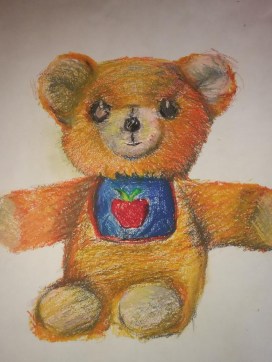
chalk_teddy (2)Behavior analysts are tasked with doing no harm. Like other professionals who adhere to a rigorous code of ethics, they are responsible for working only in their defined areas of competence, while seeking supervision and training in other areas as appropriate if needed to grow their expertise.

A new training is available from Dr. Kolu on the ethical and behavioral treatment of cases related to “trauma” (e.g., adverse childhood experiences or variables related to early disrupted caregiving). See some of the learning objectives below, check out our related blog series, and contact us today if we can support your team.

SAFE-T model Continue reading →

Thanks: To a scientific grandfather I never met, and other mentors

27 Thursday Jul 2017

Posted by kolubcbad in Behavior Analysis, Neuroscience, Uncategorized

≈ Leave a comment

This past week, a great man of science passed away unexpectedly. In a loss profound within the behavior neuroscience community, we miss Howard Eichenbaum. This scientist was known for his prolific work on the hippocampus, a seahorse-shaped structure shared by animals from rodents to people, and taught us much about the brain’s role in memory, learning, and emotion. One of his graduate students, Timothy Otto, became one of my own graduate mentors.

For several years until a decade ago, I spent time in his Rutgers laboratory. I learned from, studied under, and published with Dr. Otto; his criticism helped strengthen my work, hone my behavioral observation expertise first watered at UNT, and illuminate skillset cracks that I continue to work to fill.

Perhaps good mentors hope we follow in their footsteps. I think great mentors foresee that often, we will not, and still encourage us to forge a unique path—or to find the “path that has heart”. From the vantage point of my private practice serving adults with dementia, developmental disabilities or autism, and children affected by Rett syndrome, asperger’s, or foster care, I realize now how great a loss it might seem to have one’s student (although I was not all that promising) leap from the academic tower—and fall right out of the neurotree.

Yet although we are no longer tethered, we remain invisibly connected. Today my work touches some of the most vulnerable populations and is informed in a way it could not have been except for those laboratory days.

When I support foster families who raise babies exposed in utero to drugs of abuse Continue reading →

Client success story

28 Saturday May 2016

Posted by kolubcbad in Uncategorized

≈ Leave a comment

As a community behavior analyst with clients all across the age span, Dr. Kolu goes to her patients where they need her, working in their homes, schools, nursing homes, family visitation rooms, doctor’s offices, or the grocery store – wherever the challenging behaviors are worst, or where the skill deficits are most pronounced. Recently, Dr. Kolu has been partnering with community agencies that support families involved with the foster care system. One of our clients lived with a foster family who began working a year ago to learn strategies to support behavioral wellness. After removal from a drug-using and neglectful biological home, young clients often experience challenges related to toileting, eating, getting adults’ attention safely, and learning to play or interact with siblings (and more). Dr. Kolu provides social emotional support or developmental intervention from a behavioral perspective, and these services may be funded by early intervention, faith based organizations, or health and human service or other agencies. Working carefully with the child and family, Dr. Kolu provides coaching, data collection and observation, learning how a child’s past experiences have affected their current behavior and participation in their environments. Experiencing early trauma, abuse or neglect, or disrupted caregiving early in life impacts a child’s ability to communicate their wants and needs, get along with other children in the family, and participate in childhood appropriate routines, play, and learning opportunities. In this success story, we helped to teach our client how to play or talk with others instead of hurting other people, and to play safely by himself for a brief moment while a caregiver turned away. Together with the family, we learned that the typical parenting techniques successful with their other biological and foster children were not effective with this child, and used individualized strategies instead based on the functions of his behaviors and history of interactions with his previous and current environments. As the foster family learned new strategies (for example, to support the child to eat only foods, participating in meals and snacks at appropriate times instead of foraging through the trash), the child used appropriate behavior and language much more often. After about a year of working on these behaviors once or twice per month in family coaching sessions, the child’s behavior had improved so much that the family stopped needing regular coaching. The child has now been adopted by his foster family and is a happy three year old with siblings of his own. If you are interested in hearing more about Cusp Emergence and our work with foster families in Colorado, email Dr. Kolu through the website or leave a comment and we will get back to you!

“Will I have bubbles today?”

28 Saturday May 2016

Posted by kolubcbad in Uncategorized

≈ Leave a comment

One time, I worked with a little girl who seemed to be “typically developing”.

This was a joyful experience for both her family and I, although it was unusual for a person with my credentials to have been asked to spend time conducting “therapy” or intervention for a girl who was seemingly doing just fine. It may seem unusual for a bright, well-meaning, and well-equipped family to request assistance from a behavioral doctor, when the child is doing well. In fact, many months into treatment, still months away from her approaching 3rd birthday, I heard the child say to her play partner, “At some point will you want a different color crayon?”

As strange as it seemed, this was the same child who had seemed nearly non-vocal when I’d begun therapy with her a few short months earlier. She had not been talking much. She was only using single words and very short phrases. She wasn’t communicating using her words, to get her wants and needs met, much less express her thoughts or wants during play. In fact, when it came to playing, she often spent time lining up household items, seeming to ignore many of the wonderful toys her family put in her surroundings.

Her mother found this distressing, and as a clinician familiar with the signs of autism and other pervasive developmental disorders, I too was concerned. However, as we worked together, we soon learned that she was interested in play, but didn’t know how. Toys were interesting to her when we acted interested. As soon as we worked on play, while making sure it didn’t seem like “work”, this little girl became an expert player in no time!

Children need play, but many of us aren’t sure how important it is, or how to encourage this when it doesn’t seem to be happening on its own. And what about children who don’t seem to “want” to play with toys or explore their environments? Other children seem to play in unsafe, repetitive, or non-social ways, or even lack interest in toys or games altogether. Since families with children who are otherwise “typically developing” can benefit from learning ways to encourage their children to play, coaching from a behavior analyst experienced in child development can be very helpful to these families. The child and family in this story quickly learned strategies that have resulted in her communicating more and more of her needs, growing more confident and independent each day, and learning how to enjoy playing with toys, and playing with others. But today, we consider together one of the most important lessons this young lady taught me through her amazing mother.

6 months into treatment, I had a conversation with the child’s mom about bath time. As we discussed the routine, I learned a lot about what the family valued. I learned that as the child prepared for her bath, it was always related to nap time, and that she carefully selected and laid out the clothes she would wear after her nap, the books she would read with her mother as she laid down to sleep. I listened to them describe the bath routine with its long succession of steps, including starting the water, undressing, getting lotion and towels ready for the time following the bath, getting bath toys and clothes and supplies ready for the adventure.

The adventure that occurs each day is still full of possibilities.

And at the last minute, when the child was almost ready to undress and get into the water now running into the bath tub, her mother always asked an essential question: “Will you have bubbles today?”

Her mother’s eyes twinkled as they shared with me the warmth contained in this interaction, the predicted enjoyment of the bubbles, the compassion for her child making a selection she makes every day.

“She ALWAYS wants bubbles”, the mother said to me in a loving voice that sounded both amused and kind. “She always wants bubbles. But every day I ask her anyway. She thinks about it. Then she tells me her choice. We add the bubbles. And every day it’s a new adventure.”

The next morning, as I got in my car, I sat for a moment. I took a deep breath that contained possibilities we may ignore. Nevertheless they are there, unseen! How much of our lives is on autopilot? Do we turn on the radio and become instantly enmeshed with its ads? Do we experience unconsciously symptoms of a mind occupied by habit, like a clenched jaw, risen or hunched shoulders, and reviewing repeatedly what has gone wrong in our lives, or what we have to do today? Do we weave in and out of traffic, getting ready through the loud rock music to descend with our monkey mind into shallow breaths and feeling aggressive justification at our rage when others cut us off in the inevitable traffic interactions that follow? Do we flip to a slow song and allow our mind to drift from wonder to sadness with the whim of the dj’s successive plays? Do we turn on a country or pop station and cry along with songs we danced to decades ago, with people who no longer care about us? Do we leave our phone turned on, to blindly answer any call or text that comes, despite the needs of attending to our environment, the other drivers, the road? Do we commit ourselves accidentally before we have considered the need? Do we force habits on ourselves and others without the beauty of appreciating a moment of possibilities?

So I left the radio off. I breathed deeply into my drive. I planned ahead to practice loving kindness during my day. I noticed hawks circling and diving around me. And I practiced this repeatedly, growing grateful for the opportunity to notice a need, and compassionately meet the need. I gradually saw concentric circles of my world becoming visible to me and expanding daily as I noticed more and more of my surroundings. I varied my drives more. I took the roads less traveled that did not promise to save me 2 minutes of driving time on an already 55 minute trip. I loved the trees with my whole being. I watched the clouds. I felt joy, sadness, the feeling of having everything I needed. And I tasted the beautiful silence.

Several drives later, when I turned on the radio, it was time. It was a response to a “feeling” that I’d like to turn on music. I’d been calm and considerate to myself for much of my drive, and now I found a station that matched my mood. Instead of allowing my mood to rush headlong into descent, following the topsy turvy waterfall of changing stations, I noticed and appreciated how I stayed mindful of the intention I’d set earlier for the day.

The question: Will you want bubbles today?

The assumption: I always have bubbles. Why would I even ask the question? Yes. I always have bubbles. Why would I not want bubbles?

The answer: I can have bubbles in my bath. It’s up to me. Am I in a bubble mood? I don’t have to be. Someday, or even some time later this week, I might not want bubbles. I can have either plain bath water or bubbles. Even though I usually have bubbles, I don’t have to. So … do I want bubbles today?

Thank you for asking. Today, at this moment, I do.

What’s your story?

22 Monday Sep 2014

Posted by kolubcbad in Uncategorized

≈ Leave a comment

Today’s message: when someone wants to tell their story, let’s listen. It’s there even if we never get the chance to hear it so first, please be kind.

Here are two powerful stories from two young men who each shared a story with their classmates. They’ve both faced challenges, although their diagnoses are about as different as they could be.

Click here for a video made by a college student with Asperger’s on dating.

Next, read about an unforgettable young man with Treacher Collins Syndrome and read his letter to new classmates, here. And if you’re interested in learning more, September 2014 is Craniofacial Acceptance Month.

Everyone has a story. Everyone’s story matters.

So we have this in common! We are all human beings and we all have our own stories. Do others know your story? Is there more to your story than others know? Children of all ages keep teaching me the answer is usually yes, there is more. What I’m showing you now isn’t all I’m capable of. What I’m telling you isn’t all I have to say. What I need to learn is bigger than your goal for me this year. I want to be able to do more than what I can ask for today.

“I’m invisible,” the tall lanky adolescent said out of nowhere. We were going for ice cream with his mom after peer interaction group that week. And this was something new. I glanced at his mother. She was intently watching her son, ready to comfort him or to try, or to suggest a strategy. We had worked on social interaction skills before, building on his skills little by little over several years. He had mastered learning to approach others to start a conversation, and learned to “read” their social cues as their complex nonverbal behavior telegraphed their boredom at an old, familiar topic. He learned to say “good game” instead of punching winning play partners. He had used these skills like a pro today. Had something gone wrong that neither adult had observed?

We didn’t know. Carefully, his mother said “I see you, champ! Your friends did too- you did a great job. Especially when you celebrated with them after the game today.”

“They’re not my friends. They are my peers. I don’t want peers! I want to date GIRLS!” His voice grew louder and sounded pained as he broke into a run toward the family’s driveway. His mother stopped instantly on the sidewalk and sank onto a bench nearby. She cried softly. “When he was first diagnosed, I thought he would never be able to talk. Now he talks circles around all of us, in every topic I can think of– but never in a million years considered that he might one day think about dating.”

His mom is not alone.

Sometimes our diagnosis, or a physical difference, makes us seem invisible to others.

Sometimes our diagnosis leads others to focus so much on one aspect of our whole self, that they forget about the other parts of a person. For instance, although meaningful relationships are important for EVERYONE, sometimes we forget they would be just as important for someone with Autism.

Diagnoses are sometimes used to label physical differences. For example, I know a great kid who was born with a craniofacial structure that’s really different than most. He’s diagnosed with Treacher Collins Syndrome, but his diagnosis has nothing to do with his ability to be a great friend or do well in school!

Although everyone has amazing potential, their potential—and their story—is often hidden. Not everyone gets a chance to share their story. When they DO get a chance, it might already be too late! And without hearing the story, sometimes people react to a difference. When we react too quickly, we might judge others, or make judgments about what others can do before we even get a chance to hear their story.

First, let’s be kind.

Welcome back!

11 Thursday Sep 2014

Posted by kolubcbad in Uncategorized

≈ Leave a comment

Tags

ABA, behavior analysis, cusp emergence

What have you been up to? Cusp Emergence has been busy in Colorado. Some of our latest ventures include consulting for autism agencies; supervising clinical psychologists seeking mentorship as they learn how behavior analysis can benefit their practices; and receiving and providing continuing education. At the same time, Cusp Emergence continues to educate community centered boards about behavior analysis and its role in early intervention and the IFSP. Here are some of the lessons learned over our past year and a few things we’re looking forward to. Be well!

  • In rural communities, behavior analysis and ABA are still new- even in communities only a few minutes from Denver.
    • Are YOU new to ABA? Try this Parent’s Guide to ABA available for download
  • Early intervention can make a difference even before the child is old enough for a formal diagnosis.
    • Read some new and encouraging results of VERY early intervention implemented by parents
      • Cusp Emergence provides trainings on early intervention in children with suspected symptoms but no diagnosis. Contact us to find out more!
    • There are still not enough BCBA’s in Colorado.
      • Find a BCBA here
    • But as insurance companies begin to reimburse for ABA and as school districts gain familiarity, more and more individuals are excited to go back to school and receive education in behavior analysis.
      • Clients and their families should do their homework and check out references, credentials, experience, and expertise of a behavior analyst before hiring. Find approved university training (including many online programs) in behavior analysis
      • Download guidelines for Insurance coverage of ABA Treatment in Autism Spectrum Disorders

UPCOMING EVENTS:

Check out the community calendar maintained by Boulder and Broomfield’s Community Centered Board, Imagine! You’ll find monthly dates for Dr. Jeff Kupfer’s free class on Building Cooperative Behaviors (the next is September 24, 2014 and attendees can use the calendar to register online). You’ll also find out about diverse events including classes from the Association from Community Living, various parent and adult support groups, yoga for children with special needs, and events from the Peak Parent Center (including an upcoming webinar series on the IEP process).

Firefly Autism is holding an 11th birthday bash at Denver Children’s Museum on September 26. This sensory-friendly night should be comfortable for children and their families and friends. Come for the cake, Mickey the Clown’s balloon animals, and fun!

Special Faith: Is this child welcome in my church?

18 Thursday Jul 2013

Posted by kolubcbad in Uncategorized

≈ 1 Comment

Tags

autism, autism and church, challenging behavior, children with special needs, children's ministry, church autism, faith-based organizations

When Jeanie’s son was 7, he bit a peer nearby during Children’s Ministry. Many members were horrified and Jeanie felt ashamed and totally incapable of helping Jason. He had never been fully accepted anyway, she explained to the youth pastor as they discussed the painful events of the last service. “He’s very loud and moves around during the service, flapping his arms and bothering people. Although I know it’s related to his autism, I DON’T know how to explain that to others, and I’m not sure where to begin even if they want to help. Most places we’ve been, we stay a few months until an incident happens, and we’re too embarrassed to go back. What is he getting out of this anyway?”

Jeanie and Jason are a combination of many families, and many children.

Many members or former members of faith based communities have shared their experiences with us, and often those experiences were challenging and devastating. This secret of families often comes to light during a family behavior assessment, when we ask about activities they used to enjoy, but no longer get a chance to participate in. One mother started to cry, and shook her head in embarrassment as she described the reactions of others who had seen her child’s repeated, seemingly uncontrollable, tantrums. These events and others had really “turned her off” from trying church with her family again. At the same time, she felt sad, ashamed of stopping taking her family to church, and totally alone.

This challenge may result from the difficulty managing a child’s behavior in the community. But in a church or faith based environment, it is not all up to one parent. This is because the reactions of community members, the organization of the physical environment, and the schedule of church routines, can all contribute to how challenging a child finds it to participate in a service or other church activities.

Do your church members know how to support children with special needs? If you’re not sure, it could help to consider these questions with a core group of parents and leaders, or ask the members of the community.

Do families with special needs come a few times, and seem to drift away?

Do members of the faith community understand that occasionally challenging or loud behaviors may occur unintentionally? Do they understand supportive or non-harmful ways to respond if this happens?

Do adults and helpers understand how to help children feel comfortable who can’t use words to talk?

Do adults and helpers understand how to help students learn the “organization” of church or faith-based routines? Are adults patient? (Can adults understand it’s important to help students build attending skills gradually, instead of expecting someone to be well behaved during an entire service without practice or foundational skills?)

Can adults be flexible? If a new Sunday school student can only sit for 5 minutes without using disruptive behavior, are helpers able to design a more variable schedule and make a safe space for the student to learn the routine?

Is there a quiet safe space students could go to “take a break”?

Are other children supported to learn helpful ways to be a friend to someone with different needs at church?

Do churches provide connections to resources for those who need help navigating large crowds, or who need an alternative to loud music, long periods of sitting still, and potential sensory challenges?

When children come to mother’s day out, day care, preschool, Sunday school, or children’s ministry, those with autism or other challenges occasionally try using unsafe behavior to get what they need or want. Do adults and helpers understand how to keep children safe while building alternative skills?

These questions, and more, can be answered by consulting with a person skilled in both community interactions and behavior based supports of learners with autism, or individuals with other special needs. Some churches find it makes sense to build a volunteer or paid position in which a member acts as special ministry liason. That person, or a core group supporting families in their church, may receive consultation from a behavioral provider or special needs educator with experience in this area. Consultation from a behavioral provider can insure your staff contributes to preventative schedules for individuals affected by special needs. We can assist staff to arrange a supportive environment in which behavior that is perceived as “challenging”, can be minimized while communicative, safe interaction is supported. We can help by paying attention to growing skills of the individual with particular needs. By valuing and growing ONE individual within the faith based community, it can create a safer more harmonious environment for ALL members of that community, and attract more families to a space they can be welcome and minister to others.

This article is part of our “Special Faith” series in which we’ll be exploring topics related to helping family members with special needs, to participate more fully and joyfully within their faith based communities.

In case you don’t have a consulting behavior analyst who does community support in this way, many organizations are currently working in this area of ministry. Check out the links to read about some of those ministries, as well as stories from individuals (including mothers of children with intellectual disabilities, autism, and other challenges) sharing their experience of the church.

http://speaking4sam.wordpress.com/autism-and-the-church/

http://www.autismspeaks.org/blog/2013/06/25/partnering-black-churches-raise-autism-awareness

http://www.christianitytoday.com/women/2011/january/is-your-church-open-to-autism.html

http://dce.oca.org/resource/2087/

http://crossmap.christianpost.com/news/autism-and-the-church-how-to-serve-autistic-children-2482

http://blog.chron.com/sacredduty/2013/04/lakewood-church-expands-ministry-for-children-living-with-autism/

http://thinkingmomsrevolution.com/autism-and-the-church/

Check out Brenda’s Autism Blog for a great article on wandering

06 Thursday Jun 2013

Posted by kolubcbad in Uncategorized

≈ Leave a comment

In her post on autism and wandering, Brenda Kosky Deskin shares a family-oriented perspective on 20 practical ways to insure the safety of loved ones with autism. Some of the ideas are also applicable to our loved ones with dementia.

Thanks, Brenda, for linking to our recent post about this topic too!

Free networking event and presentation for Broomfield providers

06 Thursday Jun 2013

Posted by kolubcbad in Uncategorized

≈ Leave a comment

Tags

autism, Broomfield, early childhood, health integration, June 2013, medical home, networking

This announcement comes from our partners at the Broomfield Early Childhood Council: 

“The Broomfield  Early Childhood Council is hosting an event on Tuesday June 18th (6:30-8pm) and Thursday June 20th (12:15-1:45pm) at the Mamie Doud Eisenhower Public Library in Broomfield to learn about the work in health integration and care coordination, along with building partnerships between health providers serving Broomfield children and families.

 
This event will be catered and all are welcome!  Guest presenters are:  Colorado Department of Human Services presenting on the grant application for health integration with an objective to mitigate toxic stress in infants and toddlers; Adam Bean from the Regional Care Coordination Organization (RCCO) presenting on the work of care coordination for Medicaid patients; and Dr. Nancy Greer from Broomfield Pediatrics presenting on the vision and importance of care coordination between local providers and her work to ensure comprehensive care.  
 
This is a great opportunity to network with health providers from all disciplines and understand what the Broomfield Early Childhood Council and health partners are doing to create a comprehensive system of care for early childhood!
 
Please RSVP to jessica@broomfieldecc.org.  Look forward to seeing you there!”

Do you wonder why they wander?

09 Thursday May 2013

Posted by kolubcbad in Autism, Behavior Analysis, Community, elopement, safety skills, Uncategorized

≈ Leave a comment

Tags

autistic elopement, bolting, community safety, elopement, running away, safety skills, wandering in children with autism

Image

Recently Brenda, a mom and autism social media specialist, posted a story to her website http://autismbeacon.com/, originally shared by a news organization. The story led with a terrifying statistic: according to the National Academy of Pediatrics, nearly half of children with autism will run away before their 17th birthday. However, according to AWAARE, or the Autism and Wandering Elopement Initiative, a poll conducted 5 years ago found 92% of parents reporting “a tendency to wander” in their children with autism.

Parents of children with autism have had to create their own networks, do their own research, gather their own information, be their own advocates, lobby organizations for the similarly needed but unfunded support as persons with other challenges receive. Simply put, these families have had to be the change they desperately needed, which Brenda’s website (and her activity in additional social networks) illustrates. Many of Brenda’s followers have responded to her article post by sharing their suggestions, tips, and resources for elopement. I appreciate all of them, and have integrated many into my own practice or conversations with families.

So here are mine.

  1. At any level of your involvement, know what YOU can do to prevent and respond to elopement. Families can teach safety skills and do preventative training with all family members and the community. Community leaders can advocate for mandatory training in nonviolent crisis intervention, responding to community safety alerts, warning signs in neighborhoods, fences on playgrounds at churches or schools, and awareness campaigns and meetings. School professionals can learn to not take it personally when a child’s parent demands in his IEP meeting that we need a fence around his playground because paraprofessionals might not be fast enough to prevent his running into the street.
  2. Understand reasons individuals might run away, elope, or bolt. As with any behavior used by an individual with autism, elopement often occurs to get away from a situation that is challenging, aversive, or overstimulating. Elopement also occurs to go toward a situation that is more pleasant, familiar, calm, or interesting. Does your student have a way to request visiting his favorite spot or a way to communicate that he needs to leave? Do others recognize her signs of distress that we might consider “precursors” to elopement? Do others in the family and community recognize how to interrupt a possible elopement and redirect to safety? Is everyone trained in nonviolent crisis intervention so that the child is not handled in a way that makes a dangerous situation even worse?
  3. Know which behaviors you need to teach. Teach family members to reinforce these behaviors often enough for the learner to master them.
  • Responding to safety questions: When the child is very young, we can begin by teaching children to respond to the sound of our voice. At first, it’s a safety skill to look when a parent calls our name, or to come nearer when our name is called. If your child is vocal, we can teach vocal responses to social safety questions. When mom calls “Danny!”, does Danny call back “I’m over here”? There are different levels of each of these skills, and as a student learns more sophisticated ways of answering questions, we should continue to practice safety questions. Can the child answer what’s mom’s name?  Can he answer where he lives?
  • Learn who the community helpers are in our environments, and where they are located: We can teach children to recognize community helpers, and later, what to do if they see unsafe situations.
  • Teach safe behavior: Does the child consistently look for an adult and ask prior to leaving the house? Does the child request a parent or sibling when he wants to take a walk, or go play outside? Beginning when the child is very young, we can teach him to look around and see an adult’s face before starting to do an activity where supervision is required. When one child was very young, his team placed a picture of his face on every door in the house- EXCEPT the back and front doors, and the door to the basement. On THOSE doors, we put a picture of the child with his mom. Every time we went out that door, we tapped the picture and said “We always go out THIS door TOGETHER. Where’s mom?” and we taught the child to go get mom’s attention. After that, they went outside together.  Does the student stay close when out with others? Does the student seek an adult if he gets separated from the group? Just like the research suggests, students CAN learn to do this- but they need serious practice under conditions very similar to the real thing (see this blog for an example)
  • 4. Prevent, prevent, prevent.
                      • Not once, but THREE times in the past year, I have heard a family say something like this: “I didn’t think he would leave, but after we found him down the street in a neighbor’s yard, we installed fingerprint locks on all the doors.” Listen: If we know 92% of parents report their child with autism occasionally wanders, it’s just a matter of time. If your child hasn’t run away yet, fantastic! Order locks today. There are many varieties of locking mechanisms that prevent leaving without someone else in the house hearing it. Consider whether your family needs bolts that prevent doors or windows from being opened, or other mechanisms that alert you or the police when a door is opened when  the security system is armed.

5. Research what other parents have done to prevent. Consider make an outing plan, including having a package of materials ready. If your child goes into the community, which adult is responsible for monitoring his location? Where are the safety phone numbers? Does he have activities with him that he can use to calm down if he becomes distressed or if he is in a situation he finds overwhelming or overstimulating? Where will he go if he needs a break? How will he find the needed information if he forgets your phone number? Does your community participate in Project Lifesaver? http://www.projectlifesaver.org/

6. Understand there may be help waiting for you. If your loved one is on one of the waivers supporting children or adults with special needs, they may be able to get locks or security systems funded. There are programs out there waiting to donate a fence, a lock, or even money for training.

7. Tell someone you’re concerned. Many families report they never received advice from a professional, or never discussed with their pediatrician that elopement was a concern. We need to educate pediatricians and other providers to ask about this. Primary care providers can collaborate with specialists to prevent dangerous behaviors, but this can only occur if both parties know they need to talk to each other.

8. Be aware of organizations that can help. Here is the Frequently Asked Questions page for AWAARE. You can also check out what other agencies have compiled to support families.

http://card-usf.fmhi.usf.edu/cardpubs/PLS_WanderingPreventStrat.pdf

http://nationalautismassociation.org/resources/autism-safety-facts/

http://www.projectlifesaver.org/

9. Know the research and understand that there ARE evidence based ways to teach safety skills. This article is a great example. This article shows the effectiveness of Behavioral Skills Training to teach abduction prevention skills in children with autism, and the results of teaching were maintained at follow up checks after the training had been completed. This was published in the Journal of Applied Behavior Analysis by leaders in the field of behavior analysis and used instructions, roleplay, modeling and feedback to teach a skill all children need, especially children with increased risk of running away.

 Thanks for reading. We’d love to hear your own tips and stories.

← Older posts
Newer posts →

Recent Posts

  • Lessons from a Lost Balloon: Growth, Safety, and Kindness
  • Behavioral Seismology
  • 10 Actions This Year: A call-in if you read Boggs et al. (2025)
  • Understanding Values: The Connection to Context and Action
  • I love you more than biscuits

Archives

  • July 2025
  • May 2025
  • November 2024
  • February 2024
  • June 2023
  • April 2023
  • March 2023
  • October 2022
  • February 2022
  • October 2021
  • August 2021
  • February 2021
  • September 2020
  • May 2020
  • March 2020
  • November 2019
  • September 2019
  • June 2019
  • January 2019
  • November 2018
  • October 2018
  • September 2018
  • July 2018
  • May 2018
  • April 2018
  • March 2018
  • February 2018
  • October 2017
  • September 2017
  • August 2017
  • July 2017
  • May 2016
  • September 2014
  • July 2013
  • June 2013
  • May 2013
  • April 2013
  • March 2013
  • February 2013
  • January 2013
  • December 2012
  • November 2012
  • October 2012
  • August 2012

Categories

  • About
  • acquisition
  • adults
  • Autism
  • BABA
  • BACB CEU
  • Behavior Analysis
  • behavior cusp
  • Behavioral Cusp
  • boundaries of competence
  • buffers and barriers
  • CASA
  • CEU
  • children
  • collaboration
  • Community
  • conferences
  • contextual fear conditioning
  • continuing education
  • contraindicated procedures
  • coronavirus
  • Court Appointed Special Advocate
  • Covid-19
  • Cusp Emergence University
  • CuspEmergenceUniversity
  • data
  • dementia
  • Early Intervention
  • edtiba
  • EDTIBA10
  • Education
  • Education and Trauma-Informed Behavior Analysis
  • elopement
  • Emergence
  • enriched environment
  • ethics
  • extinction
  • FAS
  • FASD
  • Fetal Alcohol Spectrum Disorders
  • flood
  • functional alternative behavior
  • hospital
  • hurricane
  • job aids
  • learning
  • mental health
  • Neuroscience
  • play
  • podcast
  • praise
  • RAD
  • reactive attachment disorder
  • renewal effect
  • resources
  • Rett's
  • risk analysis
  • risk assessment
  • risk versus benefit analysis
  • safety skills
  • sale
  • schedules of punishment
  • self injurious behavior
  • Social Interaction
  • stimulus schedules
  • supervision
  • teaching behavior analysis
  • teaching ethics
  • TI-ABA
  • TIABA
  • TIBA
  • trauma
  • trauma-informed behavior analysis
  • Uncategorized
  • variability

Meta

  • Create account
  • Log in
  • Entries feed
  • Comments feed
  • WordPress.com

Blog at WordPress.com.

  • Subscribe Subscribed
    • Cusp Emergence
    • Join 121 other subscribers
    • Already have a WordPress.com account? Log in now.
    • Cusp Emergence
    • Subscribe Subscribed
    • Sign up
    • Log in
    • Report this content
    • View site in Reader
    • Manage subscriptions
    • Collapse this bar
 

Loading Comments...